If you grew up in Berks County, you’ve probably heard it your whole life: Reading is the Pretzel Capital of the World. It’s on souvenir buttons, it’s in old Chamber of Commerce brochures, it’s in the way people from out of town talk about us. It’s one of those phrases that sounds like hometown bragging — until you look at the numbers, the names, and the reach. Then you realize it’s not bragging at all. It’s a statement of record.
At mid-century, Reading’s pretzel bakeries were turning out about 15,000,000 pretzels in a five-day work week. That kind of production took roughly 900 barrels of winter wheat each week, all sourced from Berks County. Doing the math, the U.S. Department of Agriculture estimated that feeding Reading’s pretzel ovens required the output of about 210 acres of local farmland every single week. In practical terms: pretzels here weren’t just a snack. They were an industry on the scale of steel, textiles, bricks, or railcar works. They paid mortgages, they paid taxes, and they put Reading on the map.
And according to the city’s own industrial reporting from that era, Reading was baking roughly one-third of all pretzels produced in the entire United States. You don’t get numbers like that and still pretend you’re just another bakery town. Reading was the pretzel capital because we weren’t just making pretzels. We were defining what a pretzel was.
The First Twist: Lichtenthaler Comes to Reading
The story of Reading’s pretzel identity begins just before the Civil War, when a pretzel baker moved his family from Lititz — a Moravian community in Lancaster County — to Reading, which then had a population of around 20,000 people. His name was Benjamin Lichtenthaler. Born in Lititz on March 17, 1817, Lichtenthaler started baking pretzels here that quickly earned a following around Berks County and in neighboring states. His operation began at 37 Apple Street and later moved to 207 Cherry Alley. By the time he died in 1893, his factory was producing about 1,500,000 pretzels a year.
To understand what that means, remember: this is the 1800s. No conveyor belts, no fully automated packaging lines, no large supermarket distribution chains. One and a half million pretzels a year out of Reading in that era isn’t a bake sale. It’s industrial output.
Lichtenthaler’s “Lichtenthaler Bretzel Company” was followed by the Pennsylvania Bretzel Company in 1900, which carried the work forward.
It’s worth noting something you’ll still hear from old-timers: people in Reading didn’t always spell it “pretzel.” Well into the early 1900s, local bakers were still proudly advertising “bretzels,” sticking with the German form. One Reading maker still keeps that spelling today: Billy’s Butter Bretzels, established in 1931 by William R. Edmundson at 242 Plum Street.
So when we tell this story, it’s not just about a product. It’s about a language, an identity, and a trade.
The Roots Go Deeper Than Reading (But Reading Turns It Into an Industry)
Lichtenthaler may be Reading’s “first pretzel baker,” but he wasn’t operating in a vacuum. Pretzels came to southeastern Pennsylvania with German-speaking immigrants — the same Pennsylvania Dutch culture that shaped so much of Berks County’s foodways. An 1879 article in the Lancaster paper Der Volksfreund said the first pretzel in the United States was baked in Lancaster by a man named Scherle in 1827, followed by Ambrose Rauch in Lititz, and “later by a baker in Reading.”
Rauch trained an apprentice named Julius Sturgis. Sturgis is often credited with establishing the first commercial pretzel bakery in America, in Lititz in 1861. The Sturgis family never left the business. By the 1920s, there were multiple Sturgis pretzel plants in the Reading area — including one incorporated in West Lawn in 1924 by Victor Sturgis, and another opened on South Second Street in 1928 by his cousin Tom Sturgis.
At the same time, there was an older voice in the room: John Sauermilch, Sr., of Boyertown. Sauermilch was born in Germany in 1808 and learned pretzel baking from his father. After immigrating to America in his twenties and working 18 years at a lime kiln, he opened a pretzel bakery in Boyertown around 1846 and sold pretzels “just as his father had taught him in Germany.” By the 1890s, Sauermilch was proudly telling reporters that his pretzels had been every bit as popular in their day as Lichtenthaler’s pretzels in Reading.
Sauermilch was blunt, and his comments tell you a lot about how seriously pretzel-making was taken. He said outright that most Americans didn’t know how to make a real pretzel — and, while he was at it, didn’t know how to properly drink beer either. “In the United States it is much more difficult to find a good pretzel than in Germany to find a bad one,” he told the Reading Weekly Eagle in 1893. He argued that pretzel baking was “a trade by itself,” and that too many bakers were just twisting scraps of bread dough and calling it a pretzel. “The proper pretzel dough differs widely from bread dough.”
That distinction matters. From the start, the people who built this industry here did not consider pretzels to be a side product. They considered pretzels to be the product.
Trade Secrets, Water, and Burned Straw
Real pretzel bakers were secretive. They guarded yeast formulas and dough processes like they were handling bank notes. They even argued that the success of their pretzels came down to something as specific as where the water came from. In both Lititz and Reading, bakers quietly claimed the local water had a special quality that couldn’t be replicated.
And the boil — that signature quick dip in an alkaline bath before baking — was its own closely held ritual. Pretzels were cooked in lye, traditionally made from ashes. Bakers said the best lye came from straw ash. After that, hardwood ashes (especially hickory, walnut, and maple) were next best. Each baker swore their ash blend gave their pretzel its particular flavor snap.
Meanwhile, plenty of bread bakers tried to fake it. They’d twist leftover dough from the day’s loaves into rough pretzel shapes and give them away free with bread as a selling trick. Real pretzel men — Lichtenthaler in Reading, Sturgis in Lititz — looked down on that practice, and they said so.
There was already a hierarchy forming: bakers, and pretzel bakers. Two different classes.
Cherry Street, Muhlenberg Street, Penn Street: The Neighborhood Pretzel Boom
By the late 1800s and early 1900s, pretzels weren’t a one-man operation in Reading anymore. They were a web of bakeries, each with its own loyal following, each known by address.
John S. Hendricks and John T. Adams ran a business at 335 Cherry Street. In the 1890s, they advertised themselves as having “formerly been with Lichtenthaler,” trading on that lineage. A Reading business directory in 1893 said their trade had already grown enough to require six experienced men, producing about 6,000 “regular size bretzels per day.” By 1898 they were up to eight men, two ovens, more than 4,000 barrels of pretzels annually, and an annual product worth $12,000 — serious money at the time. That shop later evolved into J.T. Adams & Co. in 1907.
Other Reading pretzel names read like a block-by-block tour of the city’s old street grid.
• Addison Guyer’s bakery at 435 North Ninth Street.
• Daniel Mayer at 709 Penn Street and Christian Mayer at 52 North Tenth Street.
• George May at 344 Locust Street.
• Charles Muntz at 1410 Muhlenberg Street, who advertised “200 for 1 dollar.”
• Frank P. Nistle, who started his pretzel business in 1903 on Walnut above Locust.
• William H. Behrle, who baked on Fairview Avenue; his son stayed in the trade and later worked with Heller Bakery on North Ninth Street.
This wasn’t an occasional novelty food. Pretzels were everywhere — rowhouse kitchens, corner bakeries, wagons, back doors of taverns, markets. You didn’t “go get pretzels.” Pretzels came to you.
And of course, there was Andrew Muntz, son of Augustus Muntz (who started baking in 1856). Muntz worked out of 121 North Eighth Street and was locally famous for his wit. He’d go around the county selling pretzels and verbally sparring with anyone who got smart with him. When a New Yorker tried to give him attitude, Muntz asked why people in New York “never ate the cross in the pretzel.” After letting the man twist, he delivered his punchline: “Because then they’d have nothing to sell.”
That’s pure Berks County. We didn’t just sell you a pretzel — we made sure you knew it was better than yours.
Bachman, Quinlan, Billy’s: The Reading Names That Went Big
Some of these businesses exploded in scale.
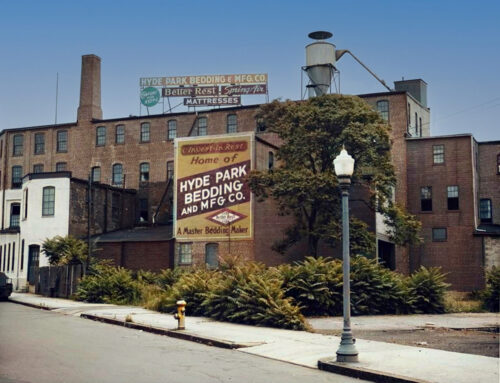
In 1884, Joseph S. Bachman began baking pretzels in a small plant on Nicolls Street. The business grew so successfully that after his death in 1923 it had to incorporate and expand into a larger facility in Hyde Park to keep up. Bachman would become one of the dominant pretzel names in Berks County and, eventually, far beyond it.
Quinlan’s Pretzel Co., launched in 1923, did something culturally important: it deliberately rebranded the pretzel. Pretzels had long been paired with beer — salty bar food, a beer garden snack. Quinlan’s pushed the pretzel “out of the saloon and into the parlor.” In plain English: pretzels became something you’d serve in the living room with ice cream instead of something you ate standing up with a lager. That shift made pretzels a family snack, not just a bar snack.
And again, Billy’s Butter Bretzels held onto the old German spelling “bretzels,” keeping that sense of Old World pride alive in Reading into the 20th century.
How a Reading Pretzel Is Made (The Real Way)
Here’s the traditional Reading/Berks County hard pretzel process, the way local bakers themselves described it:
You start with wheat flour, yeast, salt, and water. That’s it. The dough is portioned into small pieces, rolled into strips, and twisted into the classic loop. In early days, that twist was always done by hand. After a brief rest to let the dough rise, the pretzels are dropped quickly into boiling water with soda (historically, true lye). This partially cooks the outside of the pretzel — the same way you’d par-cook noodles or dumplings — and sets that shiny brown crust.
Then each pretzel is salted and baked. The oven’s heat locks the salt on so it doesn’t melt off. After baking, pretzels aren’t just pulled and bagged. They go through a drying or toasting stage to force out moisture and guarantee that signature Reading snap.
For almost a century, all of this happened in old-style hearth ovens. Bakers stood in front of brutal heat with a long-handled wooden peel, laying down rows of pretzels and then racing to pull them before they scorched. In the earliest days, the dough wasn’t even machine-mixed. It was kneaded on quartered oak using a “jumping rail,” where a man literally sat on a lever and bounced up and down until the dough was worked.
That’s what people mean when they talk about Reading “still doing it the old way.”
The Twist Problem: “Believe It or Not,” Reading Solved It
There was one step in pretzel-making that resisted automation for decades: the twist.
By the late 1800s, newspapers were already claiming that an automatic pretzel-twisting machine had been invented in Lancaster County, supposedly capable of turning out 3,000 to 6,000 pretzels per hour. But when researchers actually checked the U.S. Patent Office, no such working patent turned up. The truth was, dough is alive. Its consistency changes with humidity, temperature, and proof time. A machine that could make a perfect twist every time was a kind of holy grail.
Even in the 1940s, people were still repeating the line (made popular by Robert Ripley’s “Believe It or Not”) that it simply couldn’t be done.
Reading proved them wrong.
In 1933, Quinlan’s perfected a pretzel-twisting machine here in Reading. That same year, Earl Curtis of South Temple — who would go on to be associated with Bachman — answered Ripley’s challenge by independently producing a working machine as well.
That breakthrough changed everything. Now you could scale. Quinlan’s, for example, was running with a capacity of about 1,000,000 pretzels per day — a massive jump from the 6,000-per-day operation of Hendricks and Adams in the 1890s.
And here’s the part locals still like to point out: even after the machines arrived, the best human hands in Reading could still twist pretzels at crazy speeds. One Quinlan’s worker, Mrs. Helen Hoffer, was recorded spinning out pretzels at 45 per minute, absolutely demolishing the old “7 or 8 a minute is the limit” figure published in 1879.
In other words, Reading didn’t just invent machine twisting. Reading also produced people the machines had to keep up with.
Pretzels Go to War
In World War II, pretzels from Reading weren’t just “nice to have.” They were defended in Washington as essential.
In 1943, the pretzel industry filed a brief with the War Manpower Commission arguing that pretzel production needed to be declared an essential wartime industry. Congresswoman Clare Boothe Luce sneered at that position and mocked pretzel makers as “pretzel benders,” grouping them with “waltzing mice.”
That didn’t go over well.
The National Pretzel Baker’s Institute answered, and the industry won. It was pointed out that while bread trucks were hauling a product that was still 60 percent moisture — heavy, quick to stale — pretzels were the most perfectly dehydrated food being shipped. Light, crisp, shelf-stable, easy to transport. In other words, ideal for moving quickly and feeding people far from home.
Reading’s pretzel makers weren’t just feeding bar patrons anymore. They were feeding a country at war.
From Plum Street to Batavia: Reading Pretzels Go Global
Reading pretzels didn’t stay in Reading.
The city’s pretzel companies were shipping product worldwide. The local Chamber of Commerce even joked about it: “Who exactly is eating pretzels in these faraway places?” they asked. The answer, according to the shipping labels, included “a turbaned Hindu in India” and “a saronged native in Batavia,” sitting somewhere on the other side of the world and crunching on a Reading-made pretzel. The companies themselves admitted they were baffled by how far their product had traveled — but the orders kept coming.
This is what people sometimes miss. Reading didn’t just make pretzels for Pennsylvania taverns. Reading exported the pretzel as an object — as a taste of here, shipped to somewhere else.
And that feeling lasts. Ask anyone who moved away from Berks County what they want in a holiday care package. The first thing people think to send a homesick friend or kid in the military is still a bag, tin, or tub of Reading pretzels.
Identity: “Pretzels and Beer, Pretzels and Beer…”
By the mid-1900s, pretzels weren’t just an industry here. They were part of the local language.
Kids in Reading remember being rewarded with a special oblong pretzel-like cracker called a “Tom Doodle,” supposedly handed out to neighborhood children who brought kitchen scraps to feed the goats kept by Tom Hannahoe — known around town as the “Mayor of Irishtown.” Nobody’s totally sure who baked them or how they were made. We just know that if you grew up in that neighborhood, you remember Tom Doodles.
Rival schools and rival towns taunted Reading at games with the same line over and over:
“Pretzels and beer, pretzels and beer, ach du lieber, Reading’s here!”
It wasn’t an insult, really. It was an acknowledgment. Everyone knew what Reading was known for.
The pretzel even worked its way into civic symbolism. When dignitaries visited, the city’s “Key to the City” had a handle in the shape of a pretzel twist. In 1904, a Reading campaign button for Theodore Roosevelt and his running mate Charles W. Fairbanks literally framed the candidates inside the outline of a pretzel.
And during big civic anniversaries, Reading leaned into the branding, adopting a Pennsylvania Dutch-flavored nickname:
“Reading, Pennsylfawnie: Bretzel Shtawdt!” (“Pretzel City.”)
When your city seal, your souvenirs, your political memorabilia, your sports chants, and your welcome speeches all reference the same baked good, that’s not marketing. That’s identity.
“Come and Pretz Awhile”
During Berks County’s Bicentennial celebrations, local boosters borrowed a line from an old Lititz verse:
“Our kindly hearts and joyful faces smile an invitation: ‘Come and pretz awhile!’”
That wasn’t just cute language. It captured something essential.
Pretzels here are social. You take a tin to somebody’s house. You send a box out of state to a kid at college. You crack a bag open at the kitchen table late at night and talk. You deliver them to a friend who moved to Florida and swears the pretzels there “just aren’t right.” The pretzel in Reading is a symbol of home, of “where you’re really from.”
It’s also proof that industry can feel personal. Reading wasn’t just a railroad town, a textile town, a steel town, a car shops town. It was a pretzel town. The difference is that the pretzel didn’t just leave smokestacks and payroll records — it left a taste, a memory, something you can hold in your hand and snap in half.
In the end, that’s why “Pretzel Capital of the World” stuck to Reading and never shook loose. We didn’t just make pretzels. We perfected them, mechanized them, defended them in Washington, shipped them everywhere, built family names on them, and turned them into a shorthand for who we are.
Reading, Pennsylvania. Bretzel Shtawdt. Come and pretz awhile.




Leave A Comment