At 11th and Greenwich Streets in Reading, Pennsylvania, there’s a brick building most people today recognize as an apartment house. If you didn’t know its past, you might walk by without a second thought. The façade still has that late 19th-century civic look — sturdy, upright, serious — and the old firehouse bay doors are long sealed. And even though there’s no company assigned here anymore — no overnight crew, no chief on duty, no alarm waiting to drop — the people who knew this building when it was still the Hampden Fire Company say the place never truly went quiet.
They’ll tell you one presence refused to leave.
They’ll tell you Chief Edward C. Dell is still on watch.
A haunting in the middle of the city
Haunted houses are usually described as lonely places — a farmhouse off a back road, an abandoned asylum, a rotting mansion on a hill. This is different.
The former Hampden Fire Company stands right in the middle of Reading’s street grid. Rowhouses. Sidewalks. City light. Neighbors with a direct view into the upstairs windows. There’s nothing remote about it. It’s not theatrically spooky. It’s ordinary.
That’s exactly what makes this story so strange. This haunting doesn’t come from an isolated ruin. It comes from a functioning municipal building where men worked, slept, and served the city — and where several of them swore, for years, that someone who had died was still inside.
The Hampden Fire Company: then and after
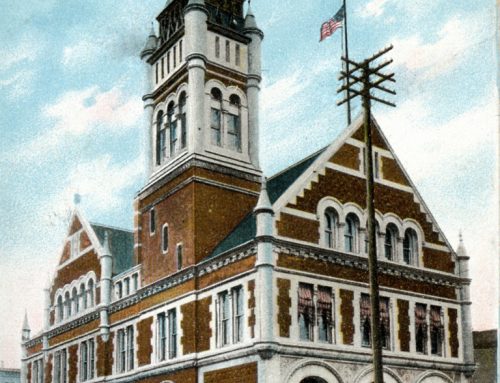
The building at 11th and Greenwich was built in 1887 for the Hampden Fire Company. For almost a century, it housed a Reading fire crew. Upstairs was the company meeting and billiards room, lined with photos, plaques, and trophies that told Hampden’s story like a museum wall. Downstairs was the apparatus area. The living quarters in between were tight and drafty — even in its last years, guys still called it “the Hamdies.”

Hampden Firehouse, 1890s
But by the late 1970s and early 1980s, time had caught up with the building. The heat was unreliable. The plaster was cracking. The place was no longer up to modern code. The city called it a liability.
Hampden was shut down as an active company in the early 1980s. Firefighters were reassigned to other stations. By the mid-1980s, the old firehouse had been converted into apartments.
On paper, that should’ve been the end of the story.
According to the people who worked there, it wasn’t.
The man whose name never left the building
The legend of the Hampden haunting is, at its core, the story of one man: Chief Edward C. Dell.
Edward C. Dell was born in 1895. He came to Reading as a teenager and worked at Bachman’s as a pretzel baker — classic Reading industry work. He joined Hampden as a volunteer in 1915 and was hired as a driver in 1917. Over the decades, Dell served 14 years as a driver, seven years as an assistant foreman, eight years as chief engineer, and in 1931 he was elected second deputy fire chief. He went on to serve as Fire Chief. This wasn’t just a job. It was his entire existence.
He practically lived in the firehouse. If he wasn’t staying at his sister’s home on Green Street, he was in Hampden. Even off-duty, he’d respond to calls. In the neighborhood, he was known for cracking open fire hydrants in the summer so kids could splash in the run-off and cool off. He chewed tobacco, rode motorcycles, loved talking about the railroad, and could go on about train signals the way other men talk baseball. He didn’t drink and didn’t swear. He once summed himself up by saying, “I’m not very religious, but I’m a Catholic at heart.”
Inside the station, Dell had “his” spot: a simple wooden chair in the dayroom. He sat in it leaned back on two legs against the wall and held court. Guys who were young then remembered years later how he’d sit there and talk about fires, about the department, about Reading, about the Reading Railroad. You didn’t tell Dell how things should be done. Dell told you.
To Hampden, he wasn’t just the chief.
He was the house.
The last alarm
On December 2, 1953 — exactly six years to the day after he’d been elected fire chief — Dell and his partner, Nathaniel Rhoads, got a call for a reported smoke condition on East Wyomissing Boulevard. They had just finished supper at Rhoads’ home. Dell got behind the wheel. Nothing unusual about that.
As they moved through downtown, circling the traffic circle at Fifth and Penn Streets, Dell was suddenly stricken behind the wheel. Even then, witnesses said, he fought to control the vehicle — he jammed it into neutral and stomped the brakes to keep from plowing through traffic. The car struck the front of a bus. Dell was rushed to Reading Hospital. Doctors said it was a cerebral hemorrhage. He never regained consciousness. He died on duty, in uniform, going to a call he never reached.

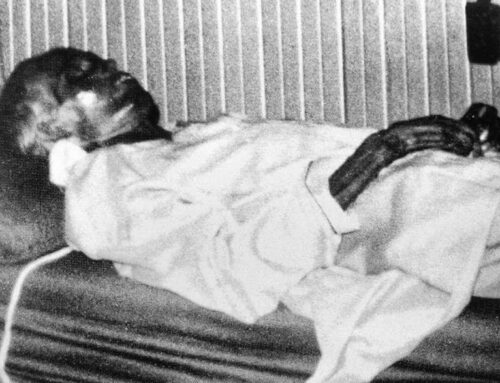
Edward C. Dell
His funeral drew an enormous crowd — firefighters, neighbors, even kids he’d let cool off in the hydrant water on summer days. He was buried at Tenth and South Cemetery. Men who were there said they never forgot the unsettling moment when the honor guard tried to close his casket and the lid wouldn’t go down at first. The ceremonial fireman’s helmet resting on Dell’s chest held it open. They had to reposition him. That detail stayed with them. Some of them would later say: he didn’t seem finished.
Inside Hampden, his portrait went up on the wall upstairs, and a bronze plaque of his face went on the building. His presence, in other words, was made permanent.
“He never finished that final run.”
This one line is the backbone of the Hampden haunting:
Firefighters who bunked in the building after Dell died said he couldn’t rest because he died en route. He died going to a job. He never completed the response.
So he stayed.
That line — “He never finished that final run” — wasn’t invented for tourists. That’s how Hampden men themselves explained what they were experiencing in the years after Dell’s death. In their view, Dell wasn’t “haunting” the building like a horror story. He was still on duty.
What happened inside (back when it was still an active station)
For decades after Dell’s death — well into the 1960s, 1970s, and right up until the station closed in the early 1980s — firefighters assigned to Hampden described events that shaped the building’s reputation.
- Footsteps on the stairs
Guys on overnight duty said they heard the slow, heavy sound of someone walking up the old wooden staircase to the second floor. This wasn’t a creak in the wall. This was “someone is coming up here.” They’d get up, check the stairs, check the rooms. No one was there. - Pool balls cracking in an empty room
The upstairs meeting room — where the company held meetings and relaxed — had a billiard table. Multiple firefighters said that after midnight, in a dead-quiet firehouse, they heard the explosive break of billiard balls scattering across the felt, bouncing into the rails. When they ran upstairs, the room was empty and calm. The balls were not in motion. - The upstairs bathroom door
Night after night, last man up would close the door to the upstairs bathroom. Morning after morning, it would be open. This became routine: lock it, go to bed, wake up, it’s open again. Nobody ever took credit. - The chief’s chair
This one felt personal. Dell’s trademark move in life was to sit in his wooden chair in the dayroom, leaning it back on two legs. After he died, Albert Ash Sr. — a longtime Hampden driver and, later, company president — said that when he sat in that same chair in the same position, the chair would sometimes kick out from under him. Not wobble. Kick. He said it happened eight to twelve times over the years, and he’d have to grab the hot heating pipes behind him to keep from going down. The sensation was not “I slipped.” It was “Get out of my chair.” - The portrait drop
Hanging upstairs was a large portrait of Dell. One winter night, firefighters sitting in that meeting room said the portrait began to shake, then fell from the wall, landing near them. Portraits can fall, sure. Nails loosen. Old plaster lets go. But they said it happened on December 2 — the anniversary of Dell’s death. After that, nobody in that room laughed about “the ghost” out loud anymore. - “Wake up. You’ve got a run coming.”
The story that turned skeptics into believers involved a Hampden driver named John Dugan. One night, Dugan was jolted awake by his bed physically shaking. Standing at the foot of the bed, he said, was Dell — dressed in white — telling him to get up because a fire call was about to come in. At that moment, there was no active alarm. After the apparition vanished, the alarm actually went off. Dugan ran the call. When he came back, he turned on every light in the building and refused to go back to sleep. The other men watched that reaction and decided they didn’t need convincing from anyone else.
“I heard it. I just pulled the covers over my head.”
Not everybody went upstairs to “check it out.”
David Priebe, who basically grew up around Hampden, said he absolutely heard things he couldn’t explain: footsteps on the stairs, movement in empty rooms, doors that didn’t stay the way you left them. Loud enough to make him sit bolt upright in bed. When asked if he ever went to investigate, his answer was simple: “No. I just pull the covers over my head and shake.”
Some firefighters wouldn’t even risk sleeping inside the building.
Relief drivers assigned to Hampden sometimes chose to sit outside on the front bench the entire night rather than lie down in the bunk. One guy did his first night and then called in sick for the rest of his rotation, just to avoid coming back.
Here’s the grim twist: the only man known to have actually died physically on Hampden property didn’t die inside. He died sitting out on that same bench. The place people thought was “safer.”
The building itself started acting… wrong
In its final years before the city shut it down in the early 1980s, the Hampden station itself started feeling hostile to live in, according to the guys assigned there.
Heat was the number one complaint. In winter, they said they could not get the temperature much past the low 60s, even with the thermostat cranked and the furnace burning through 350 gallons of oil in ten days. The radiators would hammer red-hot, but the air in the bunk areas stayed cold. Some firefighters just slept at other stations rather than freeze.
Doors didn’t behave. Firefighters swore doors they had locked at night would be open again by morning. In some cases, even the big bay door seemed to open or refuse to open without a clean mechanical reason. Some guys tried to explain it as radio interference from passing CB chatter. Others just said, “Edward.”
And every year, on December 2, someone in the room would eventually look at Dell’s portrait — and remember the night it jumped off the wall.
“Dear Edward Dell…”
By 1981, Dell wasn’t just a story told in the bunkroom. The neighborhood kids knew about the “ghost of Hampden.”
One day, two kids slipped a handwritten note through the front mail slot. They addressed it: “Dear Edward Dell.” In the note they said they believed he had come back to the firehouse “because we saw you.” They then gave him a test: if you’re really there, pull down the four window shades on the second floor facing Greenwich Street.
Deputy Chief John A. Weinhold — who had served under Dell and spent twenty years sleeping in that building — found the note. He laughed, walked upstairs, and pulled the shades himself. Was that an adult humoring kids? Was it one firefighter quietly honoring another? Both readings are possible. What matters is that by then, Dell wasn’t department gossip. He was neighborhood legend.
After the close
The City of Reading shut Hampden down as an active station in the early 1980s. The crew went to Marion (Ninth and Marion). The old Hampden building was then renovated and converted into apartments in the mid-1980s.
Even after that conversion, people talked. Tenants said they’d leave for work with all the lights off and come home to find lights on. They said doors weren’t always how they left them. They felt watched, but they couldn’t say by who. They didn’t always know the building’s past. The firefighters did.
And the firefighters had one answer.

Hampden Firehouse Apartments
Was this just drama to save an old building?
Some outsiders later suggested that maybe the ghost talk was just politics: that Hampden firefighters were hyping a haunting to stir public emotion and stop the city from shutting their station.
The guys who actually pulled nights there say absolutely not.
They say the stories about Dell’s footsteps, Dell’s chair, Dell at the foot of the bed — those were already circulating years before the shutdown fight. Those weren’t PR lines. Those were things you warned the new guy about when you handed him a blanket and said “lights out.”
To them, this isn’t about nostalgia. It’s about respect.
Final watch
So what is that building at 11th and Greenwich today?
On paper: an apartment building, converted in the mid-1980s after Hampden Fire Company was shut down in the early 1980s. The city no longer runs apparatus from there. No one is assigned there. Nobody’s sleeping upstairs waiting for a bell.
But in story — and in memory — it’s still a firehouse with a chief on duty.
Because if you ask the men who were there, they’ll tell you this:
A chief who gave nearly 40 years to that house.
A chief who practically lived there.
A chief who died in uniform on the way to a call.
A chief who “never finished that final run.”
That chief doesn’t just clock out because the city reclassified the building as “residential.”
He keeps the watch.
And every so often, if you believe the ones who had to sleep there, he still makes sure nobody misses a call.


Leave A Comment