
Socialism in Reading Then and the Socialist Movement in America Today
Why one of America's most successful Socialist movements took root in a conservative Pennsylvania industrial city—and why its experience is difficult to reproduce today.
- 01Reading's Socialist Movement Was a Working-Class Movement
- 02The Critical Link Between Labor and Politics
- 03It Was Not Imported by Foreign Radicals
- 04The Paradox of Home Ownership
- 05What Reading Socialists Actually Did in Government
- 06Political Education Was as Important as Election Day
- 07The Industrial Economy Behind Reading's Politics
- 08The American System Behind the Industrial Environment
- 09The American System Was Not Socialism
- 10Reading Socialism and the Socialist Movement Today
- 11New York Is Not Reading
- 12What Reading Can—and Cannot—Tell Us About Socialism Today
- 13The Great Difference Between Then and Now
- 14A Historical Paradox
- 15Conclusion: Why Reading Was Different
In the first third of the twentieth century, Reading, Pennsylvania, became one of the few American cities where Socialists did more than campaign from the political margins. They elected members of the Pennsylvania legislature, won municipal offices, captured the mayoralty, and twice gained control of city government.
That achievement was remarkable not simply because socialism succeeded in the United States, but because of where it succeeded.
Reading was not an immigrant radical enclave or a community overwhelmed by extreme poverty. It was an established Pennsylvania-German city with an unusually stable population, high rates of home ownership, deep religious and cultural traditions, and a reputation for conservatism. Yet within that environment developed one of the most durable working-class political movements in American municipal history.
Henry G. Stetler, whose 1943 study The Socialist Movement in Reading, Pennsylvania: 1896–1936 remains an important examination of the subject, recognized the apparent contradiction. Reading had a predominantly native population, considerable home ownership and relative freedom from extreme poverty, yet a Socialist organization became powerful enough to govern the city.
The explanation was not simply poverty, industrialization or socialist ideology by itself.
Reading socialism developed because several conditions came together: a large skilled industrial working class, strong labor organizations, unusually continuous local leadership, political education, a stable cultural environment, and an organization capable of turning economic interests into sustained political action.
Understanding that combination also helps explain why the socialist movement of twenty-first-century America is quite different from the one that governed Reading.
Reading's Socialist Movement Was a Working-Class Movement
The organized movement emerged during the 1890s from trade unionists, reformers, Christian socialists, Populists and other currents of working-class politics. A Socialist Labor Party section appeared in 1896, and Reading Socialists subsequently became part of the unified Socialist Party created nationally in 1901.
What followed was not a short-lived protest movement.
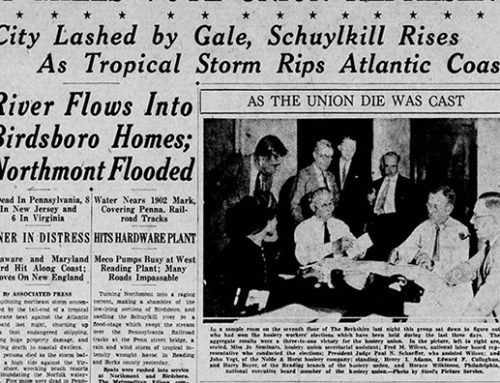
Socialists elected a representative to the Pennsylvania legislature in 1910 and gained additional municipal offices soon afterward. Socialist legislators were again elected in 1914 and 1916. During the 1920s, J. Henry Stump became mayor and Socialists captured city offices. During the Depression they again elected representatives to the General Assembly in 1930, 1932 and 1934, and in 1935 they regained control of Reading city government. Stetler regarded that continuity as evidence that Reading socialism could not simply be explained as a temporary reaction to the Great Depression.
The movement's leadership was overwhelmingly connected to skilled and semi-skilled labor.
Stetler's occupational analysis concluded that the Socialist Party represented skilled and semi-skilled workers much more directly than the traditional parties. Republican and Democratic leadership was drawn more heavily from professional, managerial and proprietary occupations.
That distinction matters.
Reading socialism was not primarily a movement of intellectuals speaking on behalf of industrial workers. Much of its leadership came from the workers themselves.
James H. Maurer, one of Reading socialism's most important figures, was a machinist and labor leader who eventually became president of the Pennsylvania Federation of Labor. J. Henry Stump likewise emerged from Reading's working-class political culture and eventually served twice as mayor.
The Socialist movement therefore represented something relatively unusual in American politics: organized workers attempting to exercise political power through their own institutions and leaders.
The Critical Link Between Labor and Politics
One of the most important reasons for Reading's success was the unusually close relationship between the Socialist Party and organized labor.
Reading already possessed significant craft-union organization before socialism became politically powerful. Skilled workers—including cigar makers, steamfitters, machinists, railroad workers and members of the building trades—had organizations through which they had already learned leadership, collective bargaining, administration and political cooperation.
Stetler found that those union organizations provided particularly fertile ground for Socialist politics. By 1900, approximately 6,000 Reading workers belonged to labor unions.
The crucial development was that organized labor and the Socialist Party did not exist as entirely separate institutions.
Leadership overlapped.
The Federated Trades Council provided workers with economic organization, while the Socialist Party gave many of those same workers a means of exercising political power.
Without it, Reading might have resembled many other American cities: a Socialist Party capable of receiving only a few percent of the vote while a trades council confined itself to workplace matters and left political leadership to the traditional parties.
Henry G. Stetler, on the fusion of union and partyThis may be the most important feature distinguishing Reading socialism from many modern socialist movements.
Reading possessed an integrated working-class political culture.
Trade unions, political organization, leadership, education and electoral activity reinforced one another.
It Was Not Imported by Foreign Radicals
Another important feature of Reading socialism was its local character.
Because Milwaukee also developed a powerful Socialist movement, observers sometimes assumed socialism in both cities resulted from nineteenth-century German immigration and the importation of European radical ideas.
Stetler found that explanation much less convincing in Reading.
Reading's Pennsylvania-German population largely descended from immigrants who had arrived in the eighteenth century—long before Marxism or the European socialist movement emerged. The community also received comparatively little nineteenth-century German immigration.
Reading's Socialist leaders themselves were largely native Americans of Pennsylvania-German ancestry. Statistical analysis found no significant relationship between foreign birth and Socialist voting. Instead, political divisions followed economic and class lines more closely.
Stetler therefore rejected “outside agitation” as an adequate explanation. Once Socialist ideas reached Reading, the movement was built largely by people already rooted in the community and particularly by local trade unionists.
That local legitimacy mattered.
Workers were not necessarily being asked to follow outsiders proposing an unfamiliar political system. They were hearing socialist arguments from neighbors, coworkers and labor leaders who spoke the language—literally and culturally—of Reading's Pennsylvania-German working population.
The Paradox of Home Ownership
Reading also complicates another common assumption about working-class politics.
Approximately three-fifths of Reading families owned their homes.
Under a simple political model, widespread property ownership might have been expected to encourage conservative voting and weaken class politics.
It did not.
Stetler found that Reading combined unusually high home ownership with substantial Socialist support. The city's population was also remarkably stable: about 86 percent of residents were Pennsylvania-born, and Reading possessed one of the highest proportions of native-born whites of native parentage among American cities of comparable size.
Many Reading homeowners remained wage earners whose economic security depended on factories, industrial employment and wages.
Owning a modest house did not transform a machinist, cigar maker or tradesman into an industrial capitalist.
In fact, home ownership itself became a political issue.
One of the controversies contributing to the Socialist victory in 1927 involved property assessments. After taking office, the administration changed assessments in a manner that generally reduced valuations on smaller working-class homes while placing higher values on central real estate, although courts subsequently adjusted some of those valuations.
Reading therefore demonstrates that property ownership and working-class political consciousness were not necessarily opposites.
What Reading Socialists Actually Did in Government
The Reading Socialists did not enter City Hall and socialize the city's factories.
Their municipal government operated within Pennsylvania law and within the larger American capitalist economy.
That limitation is important.
Stetler himself cautioned that calling the experience a “Socialist Movement” did not mean Socialist principles were fully implemented. Rather, a class-oriented political movement became powerful enough to control municipal government while remaining constrained by the broader political, legal and economic structure of the United States.
In practice, much of the Socialist municipal program resembled aggressive municipal reform combined with a preference for public administration and working-class interests.
Among the accomplishments Stetler identified were:
- Establishing a municipal machine shop to repair city equipment
- Ending private contracting for garbage collection and street cleaning
- Having the municipality conduct street construction
- Creating a centralized purchasing department
- Acquiring and remodeling a former school building for use as City Hall
- Attempting to shift property assessments away from small working-class homeowners
These actions could have been undertaken by non-Socialist administrations as well, something Stetler explicitly acknowledged.
That is itself significant.
Reading's Socialist government demonstrated that Socialist officeholders could administer a conventional American city without immediately attempting to abolish private property or overturn the surrounding economic system.
Stetler concluded that their performance helped validate the claim that working-class representatives were capable of governing efficiently.
Political Education Was as Important as Election Day
Reading socialism was also more than an electoral organization.
The party developed a social and educational culture intended to sustain political consciousness between elections.
Its Labor Lyceum maintained a library containing thousands of volumes. The Young People's Socialist League operated study circles and participated in labor struggles. The Reading Labor College, organized by the Federated Trades Council in cooperation with Socialists in 1928, offered instruction in subjects including unionism, social science, labor organization and government.
This helps explain why the movement survived political defeats.
Reading's Socialist Party was not simply assembled every four years around individual candidates. It functioned continuously.
That created political memory, leadership succession and institutional loyalty.
Stetler's larger argument was that favorable economic circumstances were only conditional factors. They existed in many industrial cities without creating successful Socialist movements.
What converted Reading's environment into political power were what he called dynamic factors: ideology, leadership, organization, education and propaganda, and the adaptation of the movement to Pennsylvania-German culture.
That distinction is crucial.
Industrialization created the opportunity.
Organization turned the opportunity into political power.
The Industrial Economy Behind Reading's Politics
Reading's political history cannot be separated from its industrial history.
The city had developed into a diversified manufacturing center with metalworking, rail-related activity, machinery production, textiles, hosiery and numerous smaller industries.
This economy required large numbers of skilled and semi-skilled workers.
Those workers possessed something politically important: productive skill.
They were machinists, builders, cigar makers, railroad workers, metalworkers and skilled textile workers whose labor was integral to the city's productive economy.
Industrial employment also placed thousands of people in workplaces where collective organization was practical. Workers experienced common economic conditions, belonged to occupational communities, and could construct durable institutions around those shared interests.
Reading's socialism was therefore rooted not simply in being “poor,” but in being industrial.
Indeed, Stetler emphasized that Reading's movement developed in a relatively advanced industrial community where extreme poverty was not the dominant condition.
That makes Reading especially interesting.
The Socialist movement did not primarily grow from social collapse.
It grew among economically productive workers seeking a greater voice over the economic and political institutions governing their lives.
The American System Behind the Industrial Environment
That raises a deeper historical question:
Where did the industrial economy that produced Reading's skilled working class come from?
It would be too simple to attribute Reading's industrialization to any single national policy. Geography, entrepreneurship, transportation, natural resources, technology, private capital and regional markets all contributed.
But Reading's development also occurred within a broader American tradition of national economic development often identified with the American System.
Alexander Hamilton's Report on Manufactures argued that the United States should deliberately develop domestic productive capacity rather than remain dependent upon established European manufacturing powers.
Henry Clay later organized similar ideas into what became explicitly known as the American System: protective tariffs, internal improvements and national financial institutions intended to encourage domestic production and create an integrated national market.
By the late nineteenth century, William McKinley became one of the country's most prominent advocates of industrial protection, arguing that tariffs could protect American production and American wages from foreign competition.
These policies did not by themselves create Reading socialism.
Their significance here is different.
They formed part of the broader developmental environment in which Pennsylvania became one of America's great manufacturing states.
Protected domestic markets, transportation improvements, investment and industrial expansion helped create cities filled with factories, machinery, productive capital and skilled workers.
Reading's Socialist movement emerged much later from institutions built by those workers.
There is therefore an important historical irony.
The industrial economy that made working-class socialism possible in Reading developed within an American economic system designed largely to strengthen domestic private industry.
The American System Was Not Socialism
This distinction matters because modern political debate sometimes treats almost any government intervention in economic life as socialist.
Historically, that is inaccurate.
The American System and socialism begin from substantially different assumptions.
Traditional socialism places class relationships and ownership of productive property near the center of political economy. In its stronger forms it seeks social, cooperative or state ownership of major productive assets.
The American System, by contrast, assumes continued private enterprise and private ownership.
Its argument is that a sovereign nation need not remain economically passive.
Government may use tariffs, infrastructure, national credit, procurement or industrial policies to encourage private productive activity that serves the nation's long-term economic development.
The distinction is therefore not simply government versus market. The more useful distinction is: government acting to develop private productive capacity versus government replacing private productive ownership.
Hamilton, Clay and McKinley were not proposing socialism.
They were advocating national development within a private-property economy.
Yet one consequence of successful industrial development was the creation of a large working class capable of organizing politically on its own behalf.
Reading is an especially interesting example of that consequence.
Reading Socialism and the Socialist Movement Today
Modern American socialism operates in a radically different economic environment.
Since the resurgence surrounding Bernie Sanders' presidential campaigns and the growth of organizations such as the Democratic Socialists of America, socialist ideas have once again become visible in American politics.
Modern socialist and progressive campaigns emphasize issues such as health care, housing affordability, labor rights, public transportation, education, inequality and taxation.
But their social and institutional base differs substantially from Reading's.
Early twentieth-century Reading socialism emerged from a city where manufacturing dominated economic life and skilled industrial workers possessed strong occupational and labor institutions.
Today's economy is much more heavily based on services, professional employment, finance, information technology, health care, education and other knowledge-based occupations.
The traditional industrial workplace has also lost much of its former political importance.
Modern socialist movements therefore often draw support from younger urban residents, educated professionals, service workers, renters, activists and public-sector constituencies alongside portions of organized labor.
They also generally operate through Democratic Party primaries rather than maintaining an independent mass Socialist Party comparable to Reading's organization.
This does not mean modern socialism has no working-class supporters or labor connections.
It means the institutional structure is different.
Reading's political strength came from the unusually tight fusion of working-class economic organization and working-class political organization.
The contemporary movement has not generally reproduced that arrangement on the same scale.
New York Is Not Reading
New York City illustrates the difference particularly well.
Contemporary democratic-socialist and progressive politicians can mobilize enormous constituencies around housing, transit, wages, public services and inequality.
But New York is a global center of finance, professional services, real estate, tourism, media and international commerce.
It is enormously larger and more heterogeneous than industrial-era Reading.
Reading's Socialists operated in a relatively compact municipality where large numbers of residents shared similar occupational circumstances, cultural backgrounds and institutional connections.
New York politics requires coalitions among widely different occupational, ethnic, economic and geographic constituencies.
The comparison therefore should not simply ask whether a Socialist can win an election in both cities.
The deeper question is whether today's movement possesses anything equivalent to the institutional depth that Reading socialism developed.
Winning an election is one thing.
Building a political culture capable of surviving multiple generations, defeats, economic changes and leadership transitions is another.
What Reading Can—and Cannot—Tell Us About Socialism Today
Reading does not prove that socialism will succeed in modern America.
Neither does it prove that socialist government inevitably fails.
Its historical lesson is narrower and more interesting.
Reading demonstrated that a democratic Socialist movement could obtain substantial governing power within the American constitutional system without abolishing elections, destroying municipal administration or immediately eliminating private enterprise.
At the same time, it demonstrated the limits of municipal socialism.
Reading's Socialist administrations never fundamentally socialized the city's economy.
They governed within a larger economic, constitutional and legal structure they did not control.
Stetler recognized precisely this limitation. Socialist principles were held sincerely by many leaders, but the surrounding American system restricted the ability of one municipality to make radical alterations to fundamental socioeconomic institutions.
That distinction is valuable when considering socialism today.
Modern political movements labeled “socialist” encompass a considerable spectrum.
Some advocate a mixed economy with private enterprise combined with stronger social insurance, labor rights and public services.
Others advocate substantially greater social ownership of productive assets.
Those are not identical programs and should not be evaluated as though they were.
Likewise, Northern European social-democratic economies are not equivalent to Soviet-style command economies.
The relevant questions are not simply whether something carries the label “socialist,” but what institutions are actually proposed:
- Who owns productive capital?
- How are investment decisions made?
- How are prices formed?
- How much economic choice remains decentralized?
- How are political pluralism and property rights protected?
- Can the system continue generating productivity, technological innovation and rising living standards?
Those questions become particularly important in a modern economy characterized by global supply chains, highly mobile capital and extraordinarily complex technologies.
The Great Difference Between Then and Now
The most important difference between Reading socialism and contemporary socialism may ultimately be neither ideology nor personality.
It is the structure of the economy itself.
Reading's political movement emerged from a mature industrial civilization.
Factories concentrated workers physically. Occupations created common interests. Trade unions created organizations. Those organizations produced leaders. Those leaders built political institutions. Political education sustained the movement. And the relatively homogeneous cultural environment made collective working-class political action easier than it was in many other American industrial cities.
Stetler therefore described Reading socialism not as the inevitable consequence of any one factor, but as the product of several conditions coming together.
Socialist ideas provided a framework. Industrial society provided the constituency. Labor organization provided institutional power. Local leadership translated the ideas into Reading's cultural language. Education maintained political consciousness. And a stable organization converted all of that into votes.
That is a considerably more complete explanation than saying that Reading simply “became socialist.”
A Historical Paradox
There is an intriguing paradox at the center of Reading's story.
The American developmental tradition associated with Hamilton, Clay and later protectionists helped foster an economy based upon domestic manufacturing, productive investment and skilled labor.
That economy remained fundamentally capitalist and based upon private property.
Yet industrial capitalism also created concentrations of workers with common occupational and economic interests.
In Reading, those workers developed organizations capable of challenging the political leadership traditionally exercised by professional, managerial and business groups.
The result was not the overthrow of the American System.
It was a working-class political movement functioning inside it.
That distinction may be the most important lesson of Reading's Socialist era.
Conclusion: Why Reading Was Different
Reading socialism flourished because several unusual circumstances converged.
A diversified industrial economy created a large population of skilled and semi-skilled workers. Trade unions gave those workers experience in organization and leadership. The Socialist Party converted economic organization into political organization. Leaders such as James Maurer and J. Henry Stump remained closely identified with the working population from which they emerged. Political education created an institutional culture extending beyond individual elections. Reading's stable Pennsylvania-German population reduced some of the ethnic and cultural divisions that fragmented working-class politics elsewhere. High home ownership did not eliminate class politics because many property owners remained dependent upon industrial wages. And Socialist leaders successfully adapted a national ideology to distinctly local circumstances.
Reading's experience therefore should not be reduced either to a triumph of socialism or a historical curiosity.
It demonstrates something more fundamental about political movements.
Economic conditions create possibilities, but institutions turn possibilities into power.
The factories alone did not create Reading socialism. Neither did Marxist theory. Neither did poverty. Neither did German ancestry.
It was the interaction of an industrial working class with leadership, organization, education and local culture that produced one of the most successful Socialist movements in American history.
Reading demonstrated that organized working-class political action could operate within the democratic framework of American society.
Henry G. Stetler's concluding assessmentThe question for today's socialist movement is therefore not simply whether socialist ideas can once again win elections.
It is whether a movement operating in a fragmented, post-industrial economy can build anything resembling the institutional depth that made Reading's movement durable.
And there is an equally important lesson for those interested in the American System.
Government action intended to build domestic productive capacity is not inherently socialism. The older American developmental tradition sought to strengthen private industry, national infrastructure and productive labor within a private-property republic.
Reading's history shows how those two traditions could intersect without becoming the same thing.
The American System helped foster the industrial world in which Reading's working class developed. Reading's Socialists then organized that working class into an independent political force.
That is what makes Reading's experience so unusual—and why, nearly a century later, it remains worth studying.
Primary source: Henry G. Stetler, The Socialist Movement in Reading, Pennsylvania: 1896–1936 (1943). · GoReadingBerks.com editorial feature.





Leave A Comment