
More than 135 years ago, on the outskirts of Reading, Pennsylvania, a group of boys lived in a school where classroom lessons were mixed with military drill, baseball, chapel services, guard duty, practical jokes, and the everyday adventures of growing up.
The school was Selwyn Hall, formally connected with the Episcopal Church as the Diocesan School of Central Pennsylvania. Fortunately, the students left behind something unusually valuable: their own publication, The Cadet.
The May 1890 issue of The Cadet opens a remarkable window into life at the school. It does more than tell us how Selwyn Hall advertised itself. It allows us to hear from the people who actually lived there.
Among the articles in the issue is a memoir titled “Selwyn Hall Ten Years Ago”, written by former student Harry Howe Bogert. Bogert looked back to 1880, when the school was still much smaller and was generally referred to as the Diocesan School.
His memories, combined with the school news, athletics, military notes, religious activities, and humorous stories printed elsewhere in the same issue, allow us to reconstruct something rarely possible in local history:
Selwyn Hall in 1890 A Church School Conducted on the Military Plan
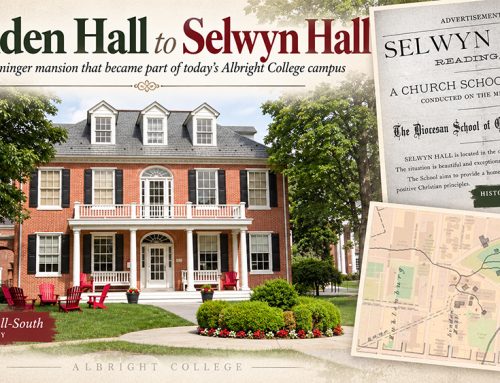
An advertisement appearing inside the May 1890 issue described Selwyn Hall as “A Church School for Boys” that was “conducted on the military plan.”
The school was described as being located on the outskirts of Reading in a setting considered both beautiful and healthy.
Its purpose extended beyond military training. Selwyn Hall stated that it sought to provide a home of thorough culture based upon Christian principles while preparing boys for several possible futures.
Selwyn Hall's Educational Program in 1890
- Preparation for universities
- Preparation for the United States Military Academy
- Preparation for the United States Naval Academy
- Preparation for business careers
- A Classical Course
- A Semi-Classical Course
- A Business Course
The headmaster listed in the 1890 advertisement was the Rev. William J. Wilkie, A.M.
But the polished advertisement only tells us what the school wanted outsiders to know.
Harry Howe Bogert's recollections tell us what the boys themselves remembered.
1880 When Selwyn Hall Was Still a Very Small School
Bogert began his reminiscence by explaining that the Diocesan School he entered in 1880 was very different from the Selwyn Hall known to students ten years later.
It was small.
According to Bogert, there were only about fifteen boarding students and approximately the same number of day scholars.
Two dormitories were enough to house the boarders.
Connected with them was a lavatory containing only about half a dozen basins.
There was no library.
There was no reading room.
Boys who wanted somewhere to read could use one of the classrooms.
There was not even a proper gymnasium.
Because some form of physical exercise was considered necessary, the school improvised by placing a set of parallel bars in the cellar.
The Military School Old Muskets and Sorry-Looking Belts
Selwyn Hall's military character was already present in 1880, but the equipment was hardly impressive.
Bogert remembered the boys carrying old government muskets that he described as “miserable, out-of-date blunderbusses.”
They apparently had been purchased cheaply from the government.
The cadets' belts did not escape his criticism either. Bogert remembered them simply as “sorry looking affairs.”
The headmaster at that time was the Rev. Joseph M. Turner.
Bogert remembered Turner affectionately, describing him as a lovable man and a person of considerable classical learning.
This was the institution Bogert entered in 1880: small, somewhat primitive, but already combining academics, religion, and military discipline.
Life Outdoors Baseball at the Foot of the Lane
The school grounds provided plenty of outdoor space, but they were not necessarily ideal for sports.
Bogert remembered the playground as large but very uneven.
Numerous trees interfered with baseball games.
Because of that, the Selwyn boys often went down to “the foot of the lane”, where the ground was flatter and better suited for ball.
The field was also used by boys from town.
That occasionally led to trouble.
Bogert admitted that the Selwyn students had some quarrels with what he called the “bad element” among the town boys, although he added that, as a rule, the groups got along reasonably well.
It is a small detail, but it brings the campus to life.
The boys were not isolated behind school walls. They ran down the lane to play baseball, encountered neighborhood children, argued from time to time, and returned to school afterward.
Student Memories “We Were Almost Always Happy”
Despite the limited facilities, Bogert did not remember his years at the old Diocesan School as miserable.
Quite the opposite.
He wrote that the boys managed to “live and learn”, that their appetites were enormous, and that they were “almost always happy.”
The word almost, however, mattered.
Military Discipline Saturday Guard Duty
Saturday could bring one of the less popular parts of cadet life.
Guard duty.
Bogert remembered that an hour or two spent standing guard did not put the students in the sweetest frame of mind.
Looking back years later, he joked that the boys had not yet understood that:
The comment makes clear that Selwyn Hall's military program was more than uniforms and ceremonies.
The boys drilled, stood guard, received military ranks, earned promotions, and functioned as a cadet company.
Behind the School The Boys Built Their Own Pond
Some of the best details in Bogert's account have nothing to do with formal schooling.
A small stream flowed across the lawn behind the school.
The boys discovered they could dam the stream and create a temporary pond.
They then sailed their boats on the water they had created.
It is an almost cinematic glimpse of nineteenth-century childhood: boys living at a military church school, escaping their studies and drills long enough to dam the stream behind the school and float small boats across their homemade pond.
A Turning Point The School Begins to Expand
After Bogert's first year, the school began changing rapidly.
When the students returned following summer vacation, they discovered three major additions.
Three Big Changes
- A new commandant
- A new dormitory
- A real gymnasium
The boys were especially excited about the gymnasium.
They quickly gave it a nickname:
Bogert remembered the changes as creating an entirely new atmosphere at the school.
The returning boys seemed filled with new energy.
A New Commandant Lot Clarke Bishop
The new commandant was Lot Clarke Bishop.
Bogert regarded Bishop as exactly the man the institution needed.
He believed Bishop helped push the school forward and brought new energy to both its military program and its athletics.
Under his management, enrollment increased and the cadets became more accomplished at drill.
Building Expansion A New Dormitory, Gymnasium, Library and Reading Room
Bogert's account also gives us important information about the physical growth of the campus.
The new dormitory was built over the dining room.
The gymnasium was constructed behind the parade ground.
During the same period, the school finally acquired a small library.
A reading room was also fitted up over the new dormitory.
The Cadet Corps New Rifles and Better Equipment
Improvements were also made to the military program.
The cadets received ten new rifles along with new military equipment.
Bogert remembered how proud the boys were of them.
The days of the old government “blunderbusses” were beginning to pass.
Sports The Selwyn Hall “Olympics”
Bishop also took a strong interest in athletics.
Bogert remembered the school having a fine baseball club, apparently known as the “Olympics.”
Bishop helped manage the team and took an enthusiastic interest in the boys' sports.
Remarkably, the Olympics name was still being used a decade later.
In the May 1890 issue of The Cadet, the student writers reported a humorous baseball game between the Olympics and another team mockingly called the “dude” nine.
The account was clearly written for laughs.
The “dudes” supposedly paid more attention to their clothing than the game.
Some refused to remove their kid gloves.
One player was said to have nearly fainted at the sight of the hard baseball.
Another outfielder picked up the ball and carried it back to the pitcher rather than risk straining his arm by throwing it.
The publication concluded that the game was a scene long to be remembered.
Athletics in 1890 Baseball and Lawn Tennis
Athletics had become an organized part of school life by 1890.
The Cadet reported that the Athletic Association was organized immediately after Easter recess.
Almost all the cadets pledged their support.
The association decided to support both baseball and lawn tennis and to purchase equipment for the sports from association funds.
Tennis had become especially popular.
By May, the publication reported that it was in “full swing”, the court was in good condition, and a new net had improved the grounds.
Faith and School Life Chapel and Confirmation
Selwyn Hall's Episcopal identity was not simply an administrative connection.
Religious life was woven directly into the school experience.
The May 1890 issue recalled a visit from Bishop Howe on the fifth Sunday in Lent.
Three cadet officers were presented for confirmation.
Three additional cadets were later confirmed in their home parishes.
The publication described the morning as sunny and beautiful.
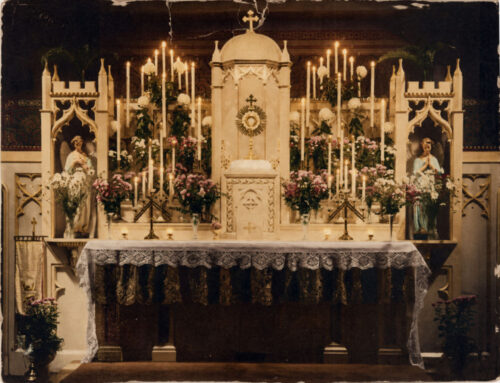
The students themselves provided roses and smilax to decorate the altar.
The editors remembered the occasion as a:
Bishop Howe preached from the text:
The editors believed occasions like these were important because they helped preserve church life for boys who had left their home parishes to pursue preparatory and college education.
Campus Improvements Selwyn Hall in the Spring of 1890
By 1890, the school Bogert had entered ten years earlier had been transformed.
Students returning from Easter recess found still more improvements.
The chapel had received a new dossal and altar cloths.
The boardwalk between the buildings had been improved so that it no longer presented a hazard to students.
The reading room had also been renovated.
It received:
- New wainscoting
- New paint
- New wallpaper
- New gas jets
The editors approvingly observed that Selwyn Hall seemed to recognize an important principle:
The latest improvement mentioned in the issue was the arrival of what the students called a “real English gardener.”
Military Competition The Gold Medal for Drill
Military training remained one of the defining elements of Selwyn Hall.
Each year, a gold medal was awarded for excellence in drill.
In preparation for the competition, a special squad was organized for extra practice.
The May 1890 issue listed the cadets chosen for the special squad and concluded simply:
June 1890 Selwyn Hall Goes to Camp
The military experience was about to become even more realistic.
Examinations were scheduled to end on June 12, 1890.
The following day, the cadets planned to leave “bag and baggage” for an encampment at Mount Gretna.
The chosen site offered forests, a lake, a large parade ground, and space for baseball and lawn tennis.
The encampment would be conducted on military lines.
The cadets expected to experience:
- Military parade
- Sentry duty
- Tent life
- Campfires
- Daily drill
The editors urged every cadet to work hard so that the military excellence displayed at camp would be a credit both to the boys and to Selwyn Hall.
April 3, 1890 The Day Selwyn Hall's Cadets Rolled Through Reading
One story in the May issue may reveal more about the personality of the Selwyn boys than anything else in the publication.
It was titled “Tally-Ho.”
April 3, 1890, marked the end of the long winter term and the beginning of Easter vacation.
About twenty cadets decided that quietly leaving school was not enough.
They hired a large open coach with comfortable seats running along its sides.
Four horses pulled the coach.
The horses were decorated with bells and plumes.
The American flag accompanied the group.
Then the cadets began their ride through Reading.
Bugles, School Yells and Songs
At street corners, the bugler sounded loud blasts.
The students followed with the Selwyn Hall school yell.
Then they sang.
Among the songs named in the publication were:
- “Here's to Selwyn Hall”
- “Bingo”
- “Farewell, Ladies”
The coach rolled rapidly through Reading's principal streets, occasionally jolting hard enough over uneven places that the boys were nearly thrown from their seats.
Reading Reacts
The city noticed.
People rushed to their windows.
Dogs barked.
Babies screamed.
Older residents stared.
Children ran behind the coach shouting.
The student writer joked that the initial reaction was almost as if an insane asylum had suddenly opened its doors and released its occupants into the city.
Once people realized that the uproar was simply a group of Selwyn cadets celebrating the beginning of vacation, the reaction changed.
Fear and confusion gave way to smiles and waving handkerchiefs.
The Ride Ends at the Railroad Station
The excursion lasted nearly two hours.
Eventually, the cadets arrived at the Philadelphia & Reading Railroad station.
There they exchanged cheers and offered toasts to one another before separating for their different trains.
Each left expecting a pleasant Easter vacation and wishing the same for his classmates.
Daily School Life Promotions, Illnesses and Ordinary News
The local notes section of The Cadet shows just how much the publication functioned like a community newspaper for Selwyn Hall.
Military promotions were printed by name.
On April 28, 1890, the publication reported several promotions, including advancement to adjutant, first lieutenant, second lieutenant, first sergeant, sergeant, and corporal.
The magazine also reported when cadets were absent, sick, traveling, or taking temporary employment.
One business manager, Lieutenant Hale, temporarily left school after accepting an appointment with an engineering corps at Huntingdon, Pennsylvania.
Sergeant Ludlum had been kept home by serious illness following Easter recess, although the school had received encouraging news regarding his recovery.
These details transform names in an old school register into real people with careers, illnesses, ambitions, and friendships.
The Cadet Students Recording Their Own World
Perhaps the most remarkable feature of the publication is that much of this history was being preserved by the students themselves.
The May 1890 issue identified:
Editors
- Jesse L. Orrick
- John Oliphant
- Norman L. Ranck
Business Managers
- Roberdeau Annan
- Reuben C. Hale
The annual subscription price for The Cadet was listed as $1.00, with individual copies selling for 15 cents.
The boys were not trying to create an archive for historians more than a century later.
They were writing about their friends, their games, their school, their teachers, their jokes, and the events that mattered to them.
That is exactly what makes the publication so valuable today.
Ten Years of Change From a Cellar Gymnasium to a Growing Campus
A School Remembered Were the Boys of 1890 Any Happier?
By the time Bogert wrote his reminiscence in 1890, Selwyn Hall had changed dramatically.
The boys living there enjoyed facilities that his classmates in 1880 could hardly have imagined.
They had a proper gymnasium.
They had a library.
They had a reading room.
They had improved military equipment.
They had organized athletics.
Their quarters were more comfortable.
Yet Bogert was not convinced that the boys of 1890 were any happier than those who had attended the old Diocesan School ten years before.
Despite everything his generation had lacked, Bogert believed the earlier students had learned just as much and enjoyed themselves just as thoroughly.
Why The Cadet Matters Hearing Selwyn Hall in Its Own Voice
Buildings can tell us where people lived.
Maps can tell us how a campus developed.
School catalogs can tell us what administrators wanted an institution to be.
But a student publication tells us something different.
It tells us about personality.
Through The Cadet, we hear boys complaining about guard duty.
We see them damming a stream to sail boats.
We watch them play baseball on uneven ground.
We see them proudly carrying new rifles.
We hear them joking about one another in their school newspaper.
We see them decorating their chapel with flowers.
We follow them onto a horse-drawn coach as they shout, sing, and blow a bugle through the streets of Reading.
And suddenly Selwyn Hall is no longer merely an old building or an almost-forgotten school.
It becomes a place filled with movement, noise, rivalry, discipline, humor, friendship, and youth.
They were simply recording their lives.
Today, that is what makes their words history.
Reading History “We Were Almost Always Happy”
Perhaps no statement captures the spirit of the old school better than Harry Howe Bogert's simple recollection.
The boys had few luxuries.
Their gymnasium had once been a cellar with parallel bars.
Their guns were old.
Their playground was uneven.
Saturday guard duty could be miserable.
Yet they played baseball, sailed boats, drilled together, ate heartily, made friends, and watched their little school grow around them.
More than a century later, Bogert's words remain one of the most human descriptions of Selwyn Hall:
For a brief chapter in Reading's history, Selwyn Hall was an entire world to the boys who lived there.
Historical Source
This article is based primarily on the May 1890 issue of The Cadet, the publication of Selwyn Hall in Reading, Pennsylvania.
Especially important is Harry Howe Bogert's article “Selwyn Hall Ten Years Ago”, in which the former student described the school as he remembered it beginning in 1880.
Additional details about athletics, military drill, religious activities, campus improvements, student promotions, the planned Mount Gretna encampment, and the Easter vacation “Tally-Ho” ride through Reading are drawn from other sections of the same May 1890 issue.
Publication: The Cadet
Date: May 1890
Selwyn Hall: Reading, Pennsylvania



Leave A Comment