
In the late 1960s, Westinghouse Broadcasting’s Urban America series pulled no punches. One of its most arresting installments, The Corrupt City, investigated how organized crime hollowed out Reading, Pennsylvania—a city of 100,000 people—through payoffs, intimidation, and public indifference.
Narrated by Group W chief correspondent Rod MacLeish, the hour-long documentary was more than a local exposé. It was a cautionary tale about the fragility of democracy itself.
The General’s Grip
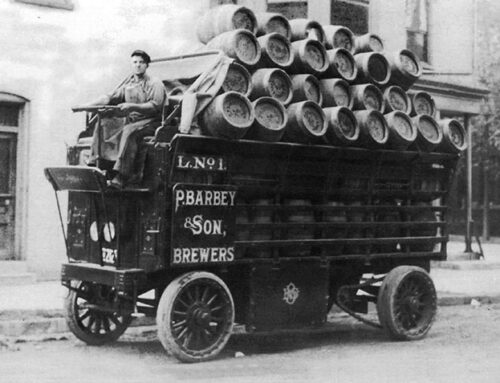
At the heart of the film was Abe “the General” Minker, who built a $5-million-a-year shadow economy from numbers gambling, prostitution, and illicit alcohol. By the early 1960s, his reach extended into nearly every arm of city government.

Abe Minker
Former police chief Charles Wade admitted he bought his position, took weekly envelopes, and passed bribes down the line. Politicians were selected years in advance by Minker’s circle to ensure protection.
“Abe told people not to fight it. His main joy in life was to maneuver people, and if they didn’t suit him, crush them or got rid of them.” – Charles and Gloria Schwambach, former owners of Queen of the Valley Diner.
Organized crime in Reading did not lurk in the shadows. It planned city government as carefully as a corporation designs a budget.
How the Racket Worked
The documentary traced the machinery of corruption:
-
Pay-to-play: Bar owners, numbers writers, and madams paid envelopes of cash—about 20% of profits went directly to protection.
-
Intimidation: Independent operators were muscled out; vending machines were swapped overnight for mob-controlled equipment.
-
Political engineering: District attorneys, sheriffs, and mayors were cultivated years before they reached office.
-
Harassment: Newspapers that challenged the system found their trucks ticketed or reporters locked out of City Hall.
The scheme thrived under Reading’s outdated five-member commission form of government, where diffused power meant blurred accountability—a “fraternity of tolerance,” the film argued.
What It Cost the City
The rackets carried a steep civic price.
-
No municipal trash collection—citizens paid private haulers.
-
Fire protection was left to volunteers.
-
Housing aged and decayed with little reinvestment.
-
Rail crossings snarled downtown traffic daily, unresolved for years.
Weary residents tolerated low taxes and weak services. In that vacuum, the mob grew stronger.
Reform—But Never Enough
Reform came in fits and starts.
In the 1950s, Mayor James Bamford promoted “pearl gray purity,” tolerating only small-time, non-syndicate gambling. His successor’s leniency brought mob slot machines back within a week. By the 1960s, federal prosecutor Thomas McBride and state investigators began dismantling Minker’s empire.
When Wade faced perjury charges, he turned state’s evidence, producing records hidden in “baby clothes boxes” that secured convictions.
But the damage lingered. Police morale was low, salaries poor, and leadership weak. Even as reformist Mayor Victor Yarnell pushed modernization, new payoff attempts emerged.
The Mob’s Shadow
The film closed with warnings that corruption’s shadow still loomed. Angelo Bruno, Philadelphia’s mafia boss, hovered nearby, and his associate Benjamin Golub slipped into Reading as a vending machine operator—a classic mob beachhead.
Within 18 months, officials reported fresh bribery attempts. The General was gone, but the conditions that birthed him remained.
A Warning for Democracy
The film’s deepest message was about democracy itself: corruption endures not just through racketeers, but through citizen apathy.
Victor Yarnell (Mayor, 1968–72):
“As long as the citizens continue to want good government, they’re going to have it, but if they don’t want it, that’s what they’re going to get. In a democracy, the people get the type of government they deserve.”
James B. Bamford (Mayor, 1952–56):
“Some sociologist claimed one time that the best government was a smart, crooked government. We unhappily have had crooked governments, but not smart ones, so we can’t test the theory in Reading.”
Conclusion
The Corrupt City remains one of the most powerful case studies of urban corruption ever aired on American television. It showed how a single syndicate could hollow out local government, weaken public trust, and exploit weak civic structures.
In Reading, it exposed the cost of corruption. For America, it delivered a warning that still stands: when people abandon their responsibilities, corruption takes control.



Leave A Comment