For much of the 20th century, Reading, Pennsylvania earned the moniker “Sin City” for its entrenched rackets in gambling, prostitution, and organized vice. Among the city’s most enduring underworld families were the Damianos — a clan whose influence extended across three generations, from the Depression-era numbers racket to the cocaine and heroin trades of the 1990s and 2000s.
Act I: Santo and Samuel “Salvo” Damiano
From Vaudeville to Vice
The Damiano brothers — Santo and Samuel “Salvo” — entered Reading’s criminal underworld in the late 1930s, but their first careers were far from illicit. The pair gained fame as part of the “Four Aces” acrobatic act in vaudeville, performing high-wire stunts alongside Roy Lukens and Chester “Chet” Farrara. Between 1931 and 1936, they toured the East Coast, appearing with major stars like the Mills Brothers and Eddie Foy Jr.
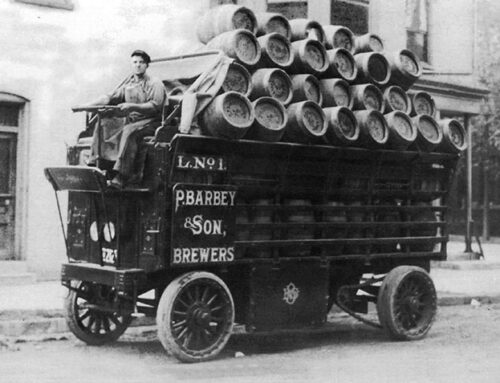
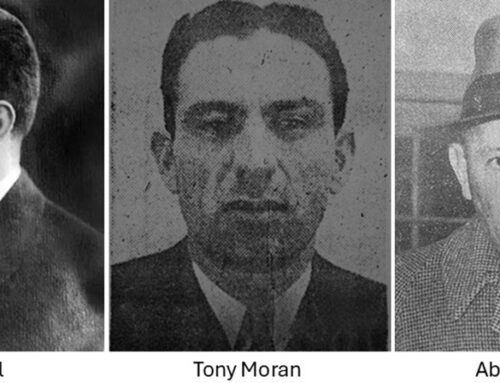
After five years of touring, they retired from show business and returned to Reading. For a short time, they pursued legitimate work — raising chickens on a small farm in Blue Marsh, running a beer distributorship at 9th & Bingaman Streets, and Santo doing carpentry. But the lure of fast money soon proved irresistible. By 1940, Santo Damiano was already working as a pickup man for Tony Moran’s gambling empire, placing him squarely in Reading’s underworld.
Santo’s Rise
Over the next four decades, Santo emerged as one of Reading’s most prominent numbers men. His police record grew with arrests for bookmaking and lottery operations. In 1961, a U.S. Senate subcommittee on racketeering identified him as a major Pennsylvania gambling figure, noting his connections to off-track betting services and his reputation as a numbers operator.
- In 1960, IRS agents raided his pool hall at 7th & Cherry Streets, seizing evidence of illegal lotteries, booking slips, and even his prized 1960 Cadillac, which was impounded after agents found untaxed liquor in its trunk.
- In 1969, Santo was arrested again when state police raided a floating dice game in Alsace Manor Township. The raid turned into a physical brawl, with Santo — still a burly, imposing figure at age 61 — fighting troopers as they swept dice and cash from the table.
Santo’s stature allowed him to operate relatively freely. When Abe Minker consolidated Reading’s rackets in the mid-1950s, nearly all numbers men were forced to pay tribute for protection — but Santo was spared. According to contemporaries, this immunity was due to his close association with Philadelphia mob boss Angelo Bruno. Law enforcement even described him as holding a quasi-“godfather” role in Reading.
Act II: Sam Damiano and the Expansion of the Family
The S&S Smoke Shop and Gambling Empire
Santo’s younger brother, Sam Damiano, followed in his footsteps. By the early 1960s, Sam ran the S&S Smoke Shop at 48 South 7th Street, a front for poker, numbers, and horse betting. Raids became routine:
- 1962: Police caught nine men playing cards in his establishment. Sam insisted he was “in the kitchen eating a sandwich” at the time, and Judge Hess dismissed the charges for lack of evidence.
- 1963: State police raided the second floor, discovering Sam’s full numbers bank with 18 writers generating roughly $1,100 a week. His personal cut was estimated at $700 weekly — a large income in that era.
- 1964: A raid on a Sunday poker game nearly netted Santo by mistake, as the brothers bore such close resemblance that police confused them.
Despite arrests, Sam built his reputation as a shrewd operator. By the late 1960s and 1970s, his interests expanded to case-fixing, loansharking, prostitution, and bail bond kickbacks, often in cooperation with corrupt officials. The Pennsylvania Crime Commission later documented his deep ties to Reading’s bail bonds industry and Hamilton Bank, where he allegedly arranged shady loans through bribed officers.
Sammy Damiano: The Counterfeiter and Nightclub Owner
Sam’s son, Samuel “Sammy” Damiano Jr., became the face of the second generation. His criminal career began in 1959, when he was caught passing counterfeit $100 bills at a Lancaster poker game. Federal investigators tied him to a nationwide counterfeit ring that printed more than $1 million in fake currency. Convicted, he served three years in federal prison.
By the 1970s, Sammy had returned to Reading and operated both legitimate and illicit businesses:
- The Clique nightclub, located on South 8th Street, was his flagship venture. In January 1978, the club was destroyed in a mysterious explosion and fire, widely suspected to be mob-related arson. The incident became a symbol of Reading’s underworld volatility.
- Berks Vending Machine Co., another Damiano enterprise, was believed by investigators to be a laundering front.
Despite his claims of independence, law enforcement reports tied Sammy to Philadelphia’s Bruno and Scarfo crime families.
Act III: The Cocaine Era and Federal Takedown
Federal Indictments of 1990
The Damiano family’s operations took a decisive turn toward narcotics in the late 1980s. In 1990, a federal grand jury indicted Sam Damiano, his son Troy, and associate Myron “Reds” Taylor on cocaine trafficking, money laundering, and firearms charges. The case was built on an elaborate undercover sting, in which two Reading police officers posed as corrupt cops for over a year, infiltrating the Damianos’ network.
The officers documented a wide range of activity:
- Drug Deals: Troy and associates delivered cocaine in bulk, including a 465-gram sale at a King of Prussia restaurant parking lot.
- Case Fixing: Sam paid $300 bribes to the undercover officers to “fix” a case for a friend’s son.
- Money Laundering: Sam offered to launder cocaine proceeds through real estate investments, promising a 12% return.
- Weapons Trafficking: He negotiated with undercover FBI agents (introduced by the “corrupt cops”) to sell firearms supposedly destined for the Irish Republican Army, accepting $1,000 as a down payment.
The sting culminated in October 1990, when Sam was arrested in the parking lot of Arner’s Restaurant in Mount Penn carrying two loaded pistols. Federal prosecutors described him as “an organized crime figure with a background in gambling and loan sharking” whose activities dated back to the 1950s. In 1991, he was sentenced to 15 years in federal prison and fined millions. His son Troy received a 7-year sentence, while co-defendants Taylor and Dominic “Mimmo” Lavigna also pleaded guilty.
Sammy’s Defense
Despite the mountain of evidence, Sam continued to insist he was no mobster. In a 1992 Berks County Prison interview, he accused the FBI of harassing him for 25 years:
“They’re running out of Mafia figures so they have to create one with me… The police say I run everything in town. I never sold coke. I’ve never seen a nickel of coke.”
His wife, Vicki, echoed his denials, portraying him as a devoted husband and father. Yet federal authorities seized luxury cars — a Mercedes 260SL, a Lincoln Town Car, and a Cadillac — along with properties linked to his criminal earnings.
Act IV: Troy Damiano and the Third Generation
The Damiano legacy extended into the 21st century through Troy Damiano, Sam’s son.
- 1992: Convicted alongside his father on cocaine charges.
- 1999: Arrested in Exeter Township for punching a police officer during a domestic dispute.
- 2006–2007: Pleaded guilty to multiple charges, including heroin and methamphetamine distribution.
- 2007: Sentenced to 7–14 years in federal prison and fined $50,000.
By this time, the Damiano name — once synonymous with gambling dens and neighborhood numbers banks — was firmly tied to narcotics and federal prison.
Legacy
The Damiano family represents Reading’s closest approximation to a Mafia dynasty. Unlike Philadelphia’s formal La Cosa Nostra, the Damianos never swore oaths or maintained a “family” structure. Yet through three generations, they operated gambling dens, nightclubs, vending companies, and drug networks — blending street-level racketeering with organized crime ties.



Leave A Comment