
Few American towns captured the contradictions of Prohibition as vividly as Reading, Pennsylvania. Between the dawn of the Volstead era in January 1920 and Repeal in 1933, Reading—and the farms and mill towns of Berks County around it—turned a constitutional experiment into a sprawling shadow industry. Streets ran with beer after raids. Rail sidings doubled as clandestine loading docks. And a young immigrant nicknamed the “Millionaire Newsboy,” Max Hassel, quietly stitched together brewery control and distribution networks that pushed Reading beer to thirsty markets from Philadelphia to the Jersey shore.
The Beer Town Before the Ban
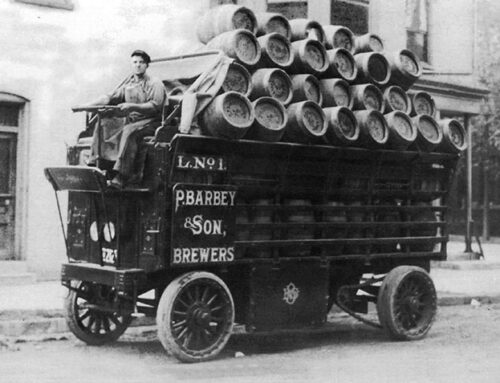
At the moment Prohibition began, five breweries still operated in Reading: Reading Brewing (South Ninth & Laurel), Lauer (North Third & Walnut), Deppen (North Third above Elm), Fisher (1600 N. 11th), and Barbey (West Elm & Gordon). Anchored by a large German-heritage workforce, beer culture was a civic baseline—stout, porter, lager, and ale part of daily life. Local politics and revenue leaned “wet”: the city and county issued licenses for “near beer,” sharing roughly $140,000 annually in fees until Harrisburg forced a halt in 1923.
The Volstead Act defined an “intoxicating beverage” as anything with more than 0.5% alcohol by volume. The law therefore allowed for the production and sale of non-intoxicating fermented malt beverages, or “near beer”. In practice, Reading breweries brewed full-strength beer, and too much of the strong stuff found its way out the door before any gauger arrived.
The Bootleg Business Model
Plant control by paper trail
By 1923–24, Reading’s beer economy ran through a maze of straw buyers and shell companies. Hassel—who had arrived from Latvia at age 11, worked as a cigarmaker and newsboy, and developed a gift for quiet deal-making—used layered deeds and fronts (Brazilian Aramzem, August Manufacturing, Prudent Products, Corporal Realty, and others) to acquire or lease multiple plants. Fisher was taken through a chain of straw transactions; Reading Brewery changed hands for about $180,000 via real-estate cutouts; Lauer was leased. Behind the scenes, brewmaster William P. F. Moeller and his sons maintained quality—one reason Reading beer drew customers far beyond city limits.
Distribution built on rails—and nerve
Railroads were the backbone. Philadelphia & Reading Railroad spurs ran to brewery yards, where loaded boxcars could roll to city yards or hook onto eastbound freights under cover of darkness. Trucks handled local runs; “autotrucks” with removed rear seats ferried smaller loads. As enforcement evolved, so did tactics: alarms, false walls, steel gates, and even a drawbridge-like barrier over a Ninth Street alley to slip trucks between guard shifts. When rails were watched, crews moved beer to parked boxcars in shadowy yards and transferred by night. The economics favored speed: if a half-barrel cost about $2.50 to produce and wholesaled for $8–$16, margins paid for drivers, lawyers, lookouts—and bribes.
Cat-and-Mouse With the Law
Jurisdictional feuds
Federal agents and Pennsylvania State Police (energized by dry Governor Gifford Pinchot) often worked at cross-purposes, while Reading police largely avoided brewery raids and bristled at state intrusions. Pinchot moved Troop C headquarters to West Reading in 1925, igniting a political fight; the “staties” quickly became the most formidable brewery raiders in town.
Set-piece raids—and beer floods
- February 1922: a major federal speakeasy sweep seizes tons of liquor.
- April–August 1924: repeated seizures of Reading beer in boxcars and trucks; on August 1, agents raid Reading Brewery for licensing violations.
- August 1924: agents open vats at Reading Brewery; the sewers back up and manholes lift. Beer streams curb-to-curb while neighbors scoop with buckets, tubs—even bathtubs. “Beer lettings” become neighborhood events.
- October 5, 1925: Troop C storms Lauer Brewery. Tests show >3% ABV. Without a court order, troopers smash bungs and open valves; beer cascades through windows and down stairways, flooding the street—an estimated 10,000 barrels. Three troopers are nearly trapped in the foaming torrent.
- February 15, 1928: simultaneous state raids at Fisher and Reading uncover five and fifteen full vats. A court orders 10,000 barrels destroyed. A month later, agents find Reading fully repaired and bubbling again; an injunction briefly slows the “run-off,” saving three vats before the law prevails.
Rails, roads, and improvisation
State police seize boxcars; brakemen are arrested at Klapperthal; freight crews sometimes demand “donations.” In one 1925 episode, a parked car with 250 halves near Sixth & Canal gets looted barrel-by-barrel by neighbors—some hidden in the canal for morning retrieval.
Bribes, Scandals, and the Courts
- The O’Neill–Chambers scandal (1925–27): a Troop C clerk (James V. O’Neill) and a trooper (Paul Chambers) accept $150/week to tip raid plans. After confessions, vanishings, hung juries, and testimony about whispered meetings (“O’Neill, sit down”), Hassel, Chambers, and fixer Fred “Duck” Marks are acquitted.
- The “bag of pears” (1927): two federal agents say they took $2,050 from Max and his brother, Morris, to allow Fisher shipments; the first payoff arrives hidden in a bag of pears under a West Reading bridge. A judge later tosses the case as entrapment.
- Income-tax wars (1926–29): Internal Revenue pegs Hassel with a $1.24 million bill for 1920–24 (later adding 1925). Subpoenas pry open alias accounts and bank ledgers. In 1929 he settles for $150,000 plus a $2,000 fine—no prison time.
Politics and Public Opinion
Reading was overwhelmingly wet. A German-heritage industrial base and entrenched tavern culture resisted Volstead from the start. The Socialist Party’s 1927 victories—Mayor J. Henry Stump and council allies like union leader James H. Maurer—put City Hall at odds with state dry crusaders; Stump rebuffed plans to swap detectives and criticized state police raids. Still, the moral story wasn’t tidy: speakeasies thrived, the WCTU kept a voice, and the city both enjoyed the prosperity of beer and winced at the spectacle of enforcement—busted doors, padlocks that didn’t hold, and rivers of lager down Ninth Street.
Reading as Regional Supplier
By the mid-1920s, federal officials conceded what Philadelphians already knew: much of the big city’s beer came from Reading. Boxcars of Reading, Lauer, Deppen—and later Fisher—were intercepted en route to Philadelphia and Atlantic City. Confiscations mounted; so did the loads that slipped through.
The Cast of Characters
- Max Hassel (1900–1933): the “Millionaire Newsboy” from Latvia who controlled or leased multiple plants through fronts and partners; invested in equipment; mastered distribution; and avoided prison. Noted for philanthropy and a distaste for violence, he nevertheless greased operations with bribes and legal maneuvers.
- The Moellers: master brewers led by William P. F. Moeller, whose insistence on quality made Reading beer desirable—and defensible at a premium.
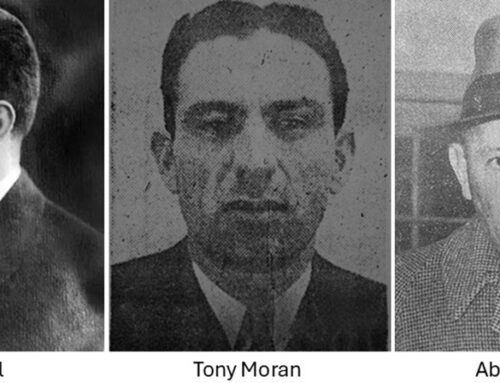
- The Marks brothers: Charlie (a compromised Prohibition agent turned customs man), Fred “Duck” (ex-cop fixer, later county chief detective), and Ike (cigar store proprietor with a back-room book).
- Lawmen: federal administrator Reuben Sams; Troop C’s Captain Samuel W. Gearhart and Lt. William Plummer; U.S. Judges Gustav Endlich, William Kirkpatrick, and J. Whitaker Thompson; District Attorney David Mauger—names behind raids, injunctions, and jury dramas.
The 1928 Siege—and the Slow Turn
Enforcement pressure peaked in 1928: rapid-fire raids, mass destructions, injunction theatrics (including a fleeting “lessee,” Thomas Betz, from an Easton brewery), and court-approved dismantling’s—vats unheaded, parts locked up, equipment hauled away. Yet even as Reading plants were gutted, “phantom” operations and New Jersey trucking kept taps flowing. Hassel shifted more activity across the Delaware; Reading’s footprint dimmed—then flickered back with 3.2 beer in April 1933.
Repeal, Licensing, and Aftermath
In April 1933 the Reading plant restarted under the “Health Beverage Company,” with Hassel ally Sam Lunine as public president. Telephone logs showed frequent calls to Hassel’s Carteret Hotel suite in Elizabeth, NJ; hearings followed. The Pennsylvania Alcohol Permit Board allowed operations “in abeyance,” warning revocation if concealed Hassel control were proven. After Prohibition, the brewery—later branded “Old Reading”—returned to family control and in 1946 was sold to the Fishman family’s Reading Brewing Company. The main building came down in 1976, though portions of the complex survive. Hassel himself was murdered in 1933 in New Jersey; an estimated 15,000 mourners lined up at his Reading viewing—an emblem of the complicated local memory he left behind.
What Prohibition Meant Here
- Economy: The underground beer economy employed hundreds, sustained farms and bottlers, kept rolling stock and garages busy—even as official revenue vanished and machinery was periodically smashed.
- Law and governance: Prohibition fractured authority. Local government often balked; state police acted as shock troops; federal agents rotated through in “flying squads.” Courts alternately padlocked and delayed, breeding cynicism.
- Community culture: Reading’s wet identity hardened. Raids turned into neighborhood theater; columnists made satire of enforcement; a generation grew up with the smell of mash—and the sight of beer running down Ninth Street.
- Crime style: Reading connected to a bigger web—Philadelphia’s Boo Boo Hoff, Mickey Duffy, and New Jersey syndicates—but the local tone was more ledger and legal brief than Tommy gun.
Coda
Prohibition didn’t dry Reading out; it rerouted the beer—through back doors, rail spurs, and even the sewers—and put the flow in the hands of organizers who could out-maneuver agencies not built for the fight. The legacy is layered: ingenuity and graft, pageantry and hypocrisy, philanthropy and menace. When the law changed, beer returned to the front door, but the city had already learned something durable about itself—and about America: that culture and commerce rarely yield quietly to crusades.


Leave A Comment