
For decades, Reading, Pennsylvania, carried the notorious moniker “Sin City,” an identity forged in smoky backrooms, illegal breweries, and the hushed transactions of vice. According to Ed Taggert’s historical account, “When the Rackets Reigned,” this infamous era was not the work of a single criminal mastermind but a violent succession of underworld kings. The timeline of power flowed from the Prohibition-era beer baron Max Hassel, to the post-Prohibition vice king Tony Moran, and finally to the empire-builder who oversaw the city’s most corrupt period, Abe Minker.
The Pioneer: Max Hassel (Reign: ~1923–1933)
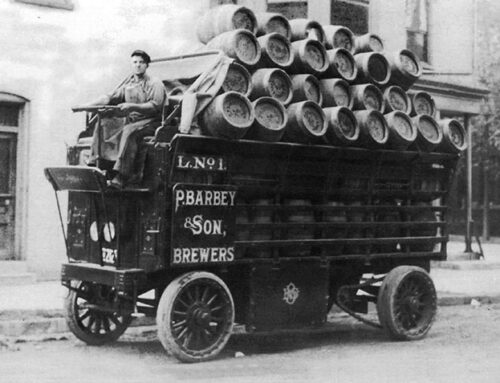
Reading’s journey into organized crime began in earnest with the opportunities of Prohibition, and no one capitalized on it better than Max Hassel. While others, including a young Abe Minker, were small-time bootleggers, Hassel quickly elevated the game. By 1923, he had become a veritable “beer baron,” amassing a fortune by acquiring interests in breweries along the East Coast.
Hassel’s method was more business than brutality. Known as a “master briber” rather than a violent gangster, he used political corruption and well-paid lawyers to protect his vast enterprise. His influence was so profound that upon his murder by New York mobsters in 1933, an estimated ten thousand mourners flooded the streets of Reading for his funeral—a testament to the city’s complicated acceptance of its vice lords. Hassel’s death marked the end of Prohibition’s reign and created a power vacuum in the local underworld.
The Successor: Tony Moran (Reign: ~1933–1945)
Stepping into the void left by Hassel was Tony Moran. For the next twelve years, Moran became the “poster boy of the city vice crowd.” His dominion was less specialized than Hassel’s but more pervasive in the daily life of the city. He controlled a diversified portfolio of illegal activities, including large-scale numbers banks, a network of brothels managed by figures like the infamous “Dutch Mary” Gruber, and a thriving slot machine business.
During World War II, Moran’s rackets boomed, catering to the thousands of soldiers stationed at nearby Indiantown Gap. He was the undisputed kingpin, a local legend whose control seemed absolute. But his reign, like his predecessor’s, ended in violence. In March 1945, Moran was shot and killed in his own basement gambling den by Johnny Wittig, an old associate with a grudge.
The Emperor: Abe Minker (Reign: ~1945–1960s)
While Hassel and Moran held the throne, Abe Minker was a persistent, ambitious figure in the background. A small-time bootlegger in the 1920s, he spent years in and out of prison, patiently waiting for his moment. That moment arrived with Moran’s death.
According to insiders, Minker orchestrated Moran’s demise, allegedly paying Johnny Wittig to eliminate the competition. With his chief rival gone, Minker began his “consolidation move.” Unlike his predecessors, Minker’s genius was not just in running rackets but in organizing them into a centralized, modern criminal empire. He systematically took control of all vice, from pinball machines and numbers to prostitution and high-stakes dice games.
His power reached its zenith in the mid-1950s under the protection of a corrupt city administration, an era so wide-open that Reading’s “Sin City” reputation became nationally recognized. Though his influence was briefly challenged after the 1951 Kefauver Committee hearings, he emerged more powerful than ever, becoming the indisputable rackets boss whose shadow loomed over the city for years.
The reigns of Hassel, Moran, and Minker tell the story of Reading’s 20th-century underworld. Each man was a product of his time, and each reign ended violently, paving the way for the next. Together, their stories chronicle the evolution of a city’s corruption, from the opportunistic bootlegging of Prohibition to a fully-fledged criminal syndicate that held Reading in its grip.
Based on the book “When the Rackets Reigned,” here is a timeline and explanation of when Max Hassel, Tony Moran, and Abe Minker came to prominence in Reading’s underworld.
Timeline of Reading’s Rackets Leadership
Max Hassel
- Early 1920s: Hassel, along with Abe Minker, begins his career in the early stages of Prohibition by buying and selling illegal liquor.
- By 1923: Hassel focuses his enterprise on beer, becoming a “beer baron” and a millionaire by the age of 25. He establishes partnerships with major figures like Philadelphia’s BooBoo Hoff. He is known for being a master briber rather than using violence.
- 1933: At the end of Prohibition, Hassel is murdered by New York mobsters. His funeral is a massive event in Reading, with an estimated ten thousand mourners, indicating the city’s complex attitude toward its vice figures. His death marks the end of his reign.
Tony Moran (Anthony Mirenna)
- 1933: Following Max Hassel’s murder, Tony Moran rises to become the “poster boy of the city vice crowd” for the next twelve years.
- 1930s – Early 1940s: Moran establishes his dominance. His rackets include large numbers banks, prostitution (controlling houses like the one managed by “Dutch Mary” Gruber), and the slot machine business.
- 1939: Moran and Johnny Wittig are convicted for running a crooked lottery. A feud begins when Moran refuses to help Wittig pay his fine.
- World War II Era: Moran’s operations, particularly his brothels, thrive due to the influx of soldiers from nearby Indiantown Gap. He is the undisputed gambling kingpin of Reading during this time.
- April 1945: Just weeks before the end of the war in Europe, Tony Moran is shot and killed by Johnny Wittig in his basement gambling joint on Penn Street. His death creates a power vacuum in Reading’s underworld.
Abe Minker
- 1920s (Prohibition): Minker starts as a “small-time bootlegger,” a contemporary of Max Hassel but a much smaller player.
- 1922: As leader of the North 8th Street Gang, he wages war with a rival gang and is later found guilty of perjury for lying about an abduction attempt by Philadelphia gangsters, leading to a prison sentence.
- 1925 – 1940: After his release from prison, Minker attempts some legitimate business ventures but drifts back into the rackets. He becomes involved in multi-state bootlegging operations, leading to several more indictments and another prison term at Lewisburg in the late 1930s. During this period, Tony Moran is the top figure in Reading.
- Mid-1940s: With Moran out of the way, Minker begins his “consolidation move” to take over the local mob, allegedly with the help of New York mobsters and by paying Johnny Wittig to eliminate Moran.
- By 1951: Minker is on the verge of completely controlling vice in Reading, leading to his appearance before the Kefauver Committee hearings.
- 1951 – 1955: His influence wanes slightly due to the national attention from the Kefauver hearings and the “pearly gray” administration of Republican Mayor Jim Bamford.
- 1956 onwards: With the election of Mayor Daniel McDevitt, Minker’s power becomes absolute. He consolidates control over pinball machines, numbers banks, prostitution, and the high-stakes craps casino, ushering in the era that earned Reading the nickname “Sin City.”
Explanation of the Succession
- Max Hassel was the pioneer who rose to national prominence during Prohibition by focusing on the highly profitable illegal beer trade. His reign was defined by this era and ended with his murder in 1933.
- Tony Moran immediately filled the power vacuum left by Hassel’s death. He dominated the local rackets scene through the Great Depression and World War II, specializing in the numbers game and prostitution. His era ended abruptly with his murder in 1945.
- Abe Minker, while active in the rackets during the reigns of both Hassel and Moran, was a secondary figure. His opportunity to become the undisputed boss came only after Moran’s murder. He systematically consolidated all vice operations under his control, forming a powerful, organized syndicate that peaked in the late 1950s. His long and patient climb, followed by his total domination, distinguishes his era from his predecessors.





Leave A Comment