
Reading, Pennsylvania • Local History
Ehrgott Jonathan Deininger and the Farm That Helped Shape Northeast Reading
A German immigrant, a 600-acre property, a country mansion, gold-bearing quartz, a landmark legal dispute, and the ground that eventually became part of Albright College.
Long before Albright College occupied the northeastern edge of Reading, the area was dominated by fields, woodland, orchards, springs, and large country properties. Among the most important of those estates was the farm associated with Ehrgott Jonathan Deininger, a German immigrant whose life became intertwined with Reading’s religious, agricultural, educational, and real-estate history.
Today Deininger is remembered chiefly because the mansion he built eventually became part of the property known as Selwyn Hall. But the house was only one part of a much larger story. Deininger was a schoolmaster and organist, farmer and horticulturalist, land manager, book lover, art collector, and philanthropist. His property figured in an unusual nineteenth-century gold investigation, nearly became a public park, hosted National Guardsmen, and became the center of a property dispute that helped launch the career of future Reading Railroad president George Frederick Baer.
The man behind the land
1801–1838
From Württemberg to Reading
Ehrgott Jonathan Deininger was born September 10, 1801, in Beinstein, in the Oberamt of Waiblingen, Kingdom of Württemberg.
His father, Christian Deininger, was a schoolteacher and organist. When Jonathan was about eighteen years old, Christian emigrated to the United States with Jonathan and several of his children. Other members of the family remained in Germany.
The family first spent a short time in Germantown, Pennsylvania, before Christian was offered a position as schoolmaster and organist with Trinity Lutheran Church in Reading. The move established the Deininger family firmly within Reading’s German Lutheran community.
Jonathan followed his father into the same line of work. After Christian’s death, Jonathan succeeded him as schoolmaster and organist at Trinity Lutheran. Church records also identify him as a longtime superintendent of the congregation’s Sunday school.
Education, music, and the church ran strongly through the Deininger family. Jonathan’s elder brother Constantine J. Deininger also became a teacher and organist. Another brother, Rev. Andrew G. Deininger, entered the Lutheran ministry, while brothers who remained in Germany also pursued careers as clergymen and schoolmasters.
A family shaped by church and education
The Deiningers were not simply immigrants looking for farmland. They came from an educated German tradition of schoolmasters, organists, and clergy. Jonathan’s later interests in books, religious education, music, agriculture, and charitable giving all fit naturally within that family background.
Marriage into the Muhlenberg and Hiester families
In the spring of 1834, Jonathan married Mary Elizabeth Hiester Muhlenberg.
The marriage placed him within one of Pennsylvania’s most prominent families. Mary was the daughter of Henry Augustus Philip Muhlenberg, a major figure in Reading who served in Congress, became United States minister to Austria, and later ran for governor of Pennsylvania. Through her mother, Mary was also a granddaughter of Joseph Hiester, governor of Pennsylvania from 1820 to 1823.
Following Jonathan’s marriage, his brother Constantine succeeded him as Trinity’s schoolmaster and organist. Later accounts state that Jonathan and Mary spent an extended period traveling in Europe before establishing their country home northeast of Reading.
The Deininger mansion
About 1836, Deininger erected a substantial brick country residence on his farm in what was then Muhlenberg Township, beyond the heavily developed portion of Reading.
It is important not to project later names too far backward. The evidence establishes that Deininger built the mansion, but the earliest newspaper evidence currently in hand calling the property “Linden Hall” dates from 1873.
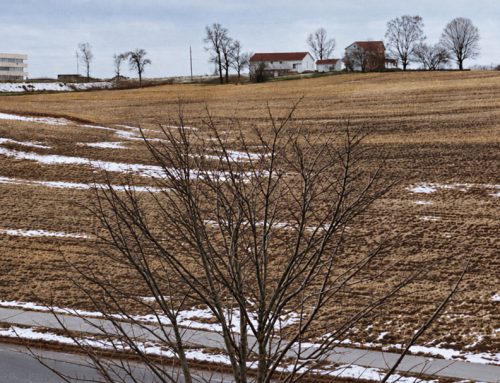
The residence stood in a rural setting of open fields, mature trees, springs, orchards, and agricultural land. At the time, Reading had not yet spread far into the northeast.
The building survived the dramatic changes that followed and ultimately became part of the complex associated with Selwyn Hall on the Albright College campus. Deininger’s 1881 obituary specifically remembered the beautiful farm in northeastern Reading and stated that he had erected the building later occupied by the Episcopal Diocesan School for Boys.

A short marriage marked by tragedy
Jonathan and Mary had two children, but both died in infancy.
Mary herself died in 1838, only a few years after their marriage. Jonathan never appears to have remarried.
His unmarried sister Rebecca Deininger later lived with him and served as his housekeeper until her death in 1868.
The loss of his wife and children left Jonathan without direct descendants, and much of the rest of his life became centered on his farm, estate, books, church, and agricultural interests.
The farm and the estate
1838–1869
A farmer and horticulturalist
After Mary’s death, Deininger devoted considerable attention to agriculture and horticulture.
His obituary stated that he worked on improving his farm and managing his estate, and he played a prominent role in the organization of the Berks County Agricultural and Horticultural Society. He was also remembered as one of its early life members.
This was more than a casual interest. Late in life he donated a valuable German-language work on cattle containing colored illustrations of sixteen types of cattle. That donation fits closely with the interests of a man who remained engaged with agriculture well beyond the period when he lived on the large northeastern estate.
Deininger’s farm stood at the edge of Reading’s expansion, at a time when the northeast section of the city was still largely rural.
How large was the Deininger property?
One of the most striking contemporary descriptions came in 1869, when a newspaper reported that the estate involved in the Deininger-Muhlenberg settlement comprised approximately 600 acres, including the mansion house and other improvements. That figure is best understood as the broader property interest involved in the settlement, not necessarily a single fenced farm of exactly 600 continuous acres around the mansion.
Gold on the farm
In 1854, Deininger’s property attracted attention for an entirely different reason.
Reports appeared concerning gold in quartz taken from his farm. A geologist investigating mineral deposits near Reading examined quartz from the area, and small particles of gold were reportedly discovered in material associated with Deininger’s property.
The discovery never resulted in a commercial gold mine. There is no evidence that large quantities of gold were ever extracted from the farm or that mining became part of the estate’s economy. Nevertheless, the episode is well documented and provides an unusual glimpse into the geology of the still-rural northeastern outskirts of Reading.
Before college classrooms, dormitories, and city streets covered the area, people were literally examining rocks from Deininger’s farm for gold.
Books, paintings, and intellectual interests
Deininger was not solely interested in farming. His obituary described him as fond of books and said that he spent much time in his library. He was remembered as well informed and as an engaging conversationalist.
The surviving evidence supports that description. His library included expensive illustrated works and German books. After his death, 84 volumes were given to Muhlenberg College. Among the collection were major illustrated works, including volumes associated with John James Audubon.
Deininger also purchased artwork. In 1876, Reading artist J. Heyl Raser sold several paintings, including a work titled “Falls of the Rhine” to E. Jonathan Deininger.
A later account even reported that a portrait of Jonathan and Mary Deininger once hung in the parlors of Selwyn Hall. The present whereabouts of that portrait have not yet been established.
The property dispute that changed everything
1868–1870
The farm enters Reading’s growth corridor
By the 1860s, Reading was expanding rapidly. Land that had once seemed distant from the city was becoming increasingly attractive for industry and residential development.
On May 2, 1868, a newspaper reported that Bernhart & Koch and George K. Levan had paid Jonathan Deininger $25,000 for twenty acres of his land lying between Eighth and Tenth streets and extending from Katzenmoyer’s Lane toward the new rolling mill.
The purchasers intended to divide the property into building lots. That transaction became extraordinarily important because it apparently triggered the legal investigation that exposed a serious defect in Deininger’s title.
George F. Baer and the Deininger title problem
George K. Levan asked a young Reading lawyer named George Frederick Baer to examine the title.
Baer discovered that Deininger did not possess the complete ownership everyone had long assumed. The problem reached back to Mary Deininger’s inheritance.
Her grandfather, former governor Joseph Hiester, had died without a will. Mary inherited an interest in the estate through her family. When she died in 1838, she attempted to leave property to Jonathan.
For decades Deininger apparently believed he owned that property outright. Baer concluded otherwise.
According to Baer’s legal interpretation, Mary’s will had been executed under laws that prevented it from transferring the real estate to Jonathan in the manner intended. Jonathan consequently held only a life interest — an estate by the curtesy — rather than complete title. Mary’s blood heirs possessed the remainder.
The dispute grew more serious because timber had been removed from some of the land. If Jonathan possessed only a life estate, removing timber could be considered “waste” because it permanently reduced the value of property ultimately belonging to the heirs.
The $60,000 settlement
Rather than allow the dispute to drag through the courts, a settlement was reached in December 1869.
Contemporary reporting stated that Deininger would transfer his life interest in the property to the heirs in exchange for $60,000. The transfer was scheduled for April 15, 1870.
The same newspaper report described the estate as approximately 600 acres and specifically mentioned the parcel purchased earlier by George K. Levan.
Baer represented Deininger in negotiating the settlement and reportedly received a legal fee of $5,000. That fee and the reputation Baer gained from recognizing a title problem that other attorneys had overlooked became important early steps in his career.
Leaving the old homestead
The timing of Deininger’s household sale suggests that the settlement marked the end of his residence on the farm.
In May 1870, he advertised a public sale at his former dwelling. The items offered provide a remarkable glimpse of life on the estate: a carriage, market wagon with springs, harness, saddle, sled, cider mill and press, grindstone, wood and coal stoves, bedsteads, tables, chairs and benches, meat tubs, chopping boards, wine and cider barrels, copper and iron kettles, kitchen furniture, a medicine closet, ladders, and numerous other household goods.
The sale took place only weeks after the scheduled property transfer. It appears to mark Deininger’s departure from the old country residence that had been his home for decades.
From farm to public landmark
1870–1883
Soldiers on Deininger’s Farm
In the summer of 1870, the 3rd Regiment National Guard of Philadelphia arranged an encampment on Deininger’s Farm.
The gathering was large enough that concession rights were advertised for ice cream, fruit, watermelon, cigars, cakes, and other refreshments.
Several years before cadets marched across the same grounds as students, military units were already using the former farm as an encampment.
Reading almost turned it into a public park
In 1871, a Reading resident publicly proposed that the city purchase the Deininger property for a public park.
The proposal described the estate as beautifully situated, with woodland, open spaces, and spring water. The writer recognized that Reading was pushing northeastward and warned that the land would eventually be subdivided and developed if the city did not preserve it.
That prediction proved largely correct. Had Reading accepted the proposal, the area around today’s Albright College might have become one of the city’s major nineteenth-century parks.
David P. Lash and Linden Hall
By 1872, David P. Lash had acquired the mansion and approximately three acres surrounding it.
He operated the property as a hotel and pleasure resort.
By October 1873, newspaper advertisements were referring to it as “The Linden Hall property.” The advertisements described about three acres, fruit, flowers, landscaped grounds, a large two-story brick mansion, and hotel and boarding-house use.
This is currently the earliest firm evidence in hand for the name Linden Hall.
The Episcopal Diocese buys the mansion
In 1874, the Episcopal Diocese of Central Pennsylvania was looking for a permanent location for a proposed school for boys.
Several communities competed for it, including York, Lancaster, Columbia, and Reading. A diocesan committee visited several Reading properties, among them Deininger’s farm and mansion.
The Reading site was ultimately chosen. In August 1874, the Diocese purchased the large Deininger mansion with approximately three acres of ground and improvements from David P. Lash for about $14,000.
The Episcopal Diocesan School for Boys formally opened in 1875. Jonathan Deininger therefore lived long enough to see the mansion he had built as a private country residence transformed into a school.


The old mansion begins to grow
The original Deininger residence was never large enough to meet the needs of a growing boarding school.
At first, changes were largely interior modifications necessary to turn a private house into classrooms and student accommodations. But by the early 1880s, expansion became substantial.
The 1882 Journal of the Diocese of Central Pennsylvania reported that during the preceding year the school building had been “considerably enlarged” and that a new dining room, dormitory, and reading room were added.
The same report stated that a large 80-by-35-foot gymnasium had been constructed, serving both as a gymnasium and a drill room.
Later school improvements included steam heating, gas lighting, exterior alterations, additional school buildings, dormitory space, and military facilities. The old Deininger mansion was gradually becoming the center of a small institutional campus.
From the Diocesan School to Selwyn Hall
In 1883, the Episcopal Diocesan School for Boys adopted the official name Selwyn Hall.
The name honored George Augustus Selwyn, first Bishop of New Zealand and later Bishop of Lichfield. Selwyn had preached at the 1871 convention at which the Diocese of Central Pennsylvania was organized and M. A. DeWolfe Howe was chosen as its first bishop.
From that point onward, the name Selwyn Hall became permanently associated with the property.
The school operated until 1895. Later, the campus passed into the hands of Schuylkill Seminary, then Schuylkill College, and ultimately became part of Albright College.


Deininger’s final years
1870s–1881
Deininger after the farm
After leaving the country property, Jonathan eventually lived at 205 North Sixth Street in Reading.
His later years show another side of him. He was deeply interested in books and maintained a substantial personal library. His obituary recalled that he was fond of books and spent much time in his library.
He also purchased art. In 1876, he bought a painting titled “Falls of the Rhine” from Reading artist J. Heyl Raser.
Later accounts also reported that a portrait of Jonathan and Mary Deininger once hung in the parlors at Selwyn Hall, although its current whereabouts are unknown.
His final illness and death
By August 1881, Deininger was seriously ill at his North Sixth Street residence. A newspaper reported that he was scarcely able to take nourishment.
His nephew Jonathan F. W. Deininger, then in St. John, New Brunswick, was notified and returned to Reading.
Jonathan died at approximately 10:30 a.m. on August 21, 1881. He was seventy-nine years old, only weeks short of his eightieth birthday.
His obituary remembered him as quiet, unostentatious, genial, well informed, and a warm friend. By that time he was a prominent member of St. John’s German Lutheran Church.
His funeral was held there, followed by burial in Charles Evans Cemetery.
His will and philanthropy
Deininger wrote his own will.
It provided $1,000 to each nephew and niece, and his Reading house and lot went to his nieces.
He directed that his grave at Charles Evans Cemetery be enclosed by a substantial fence and marked by a monument, setting aside $2,000 for that purpose.
His estate also supported Lutheran and educational institutions. Among the known bequests were $2,000 to the Lutheran Theological Seminary in Philadelphia, $1,000 for Lutheran home and foreign missions, support for the German professorship at Muhlenberg College, and a donation of 84 books from his personal library.
The books included expensive illustrated works and reinforced the contemporary image of Deininger as an educated and widely read man.
The farm disappears, but its history remains
Very little of Deininger’s enormous nineteenth-century landholding survives today in anything resembling the rural landscape he knew.
Reading expanded. Roads were extended. Farmland became building lots. Institutions occupied portions of the old estate.
The great property that newspapers once described as approximately 600 acres was gradually divided and absorbed into the growing city.
But one important physical connection remains. The mansion erected by Ehrgott Jonathan Deininger became the nucleus of a property that passed through several identities:
What began as the country home of a German immigrant and his young wife became a hotel, a military-style Episcopal academy, a seminary campus, and eventually part of a modern college.
And the land surrounding it tells an equally remarkable story — of farming and horticulture, gold-bearing quartz, National Guard encampments, suburban development, legal battles, and a public park Reading almost created.
For decades, northeastern Reading knew the place simply by the name of the man who had lived and farmed there: Deininger’s Farm.




Leave A Comment